Warm introduction: what it is and how to ask for one
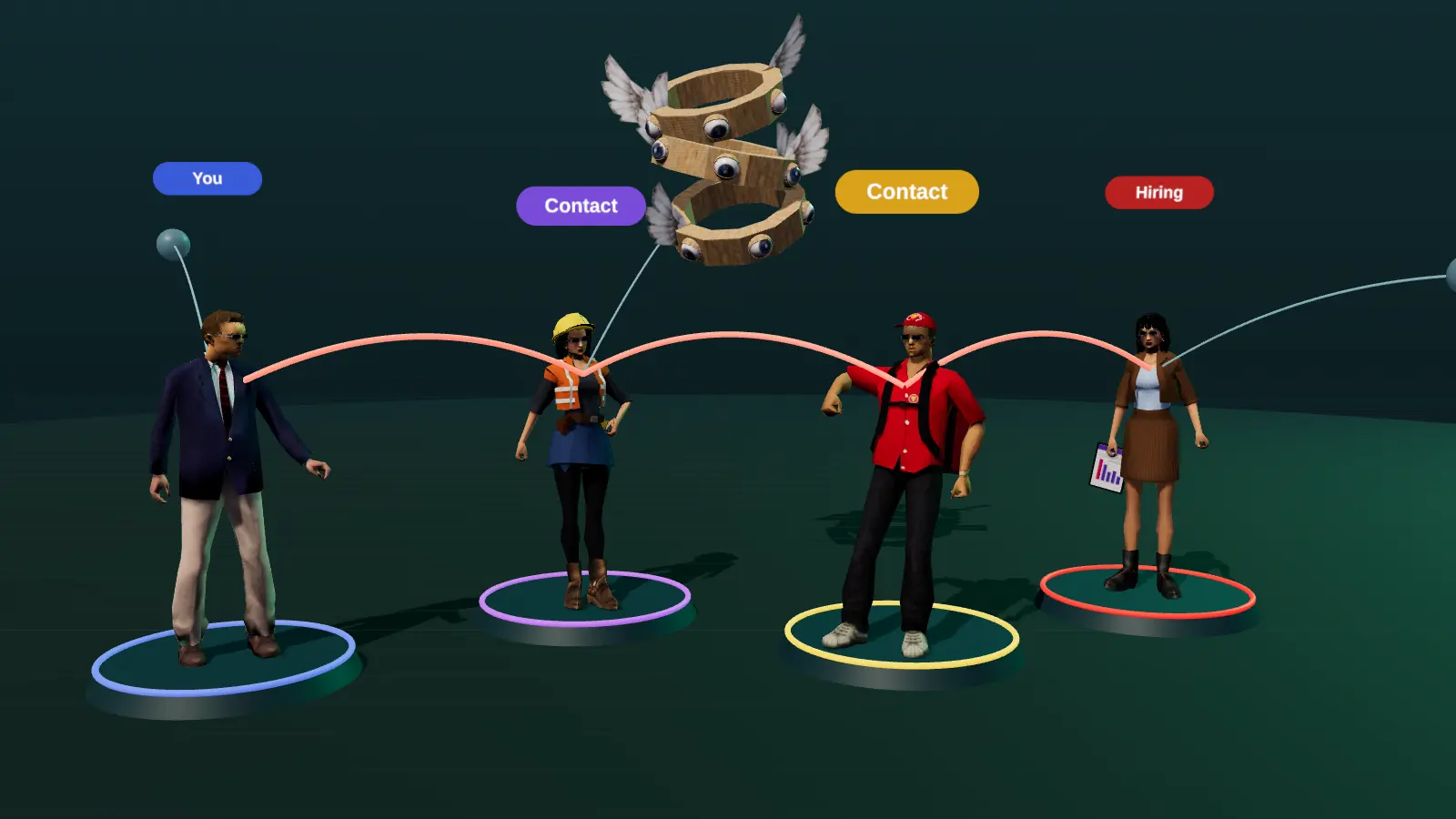
A warm introduction is when someone who knows both of you connects you with a person you want to reach, such as a hiring manager or a team member at a company you are targeting. The person receives your name from someone they trust instead of from a stranger. Done well, it takes your contact two minutes and gets you a reply that a cold message rarely does.
- A warm introduction is a connection made by someone both people trust.
- Ask for one specific person and one specific reason, not general help.
- Send a short blurb your contact can forward without editing.
- Good introducers ask the other side first: the double opt-in.
Warm introduction meaning
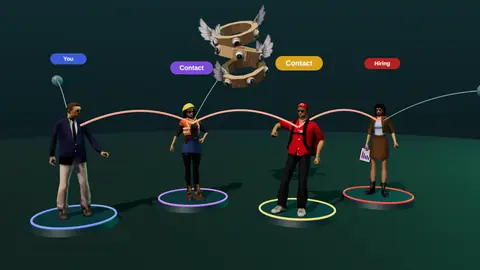
In networking, warm means there is an existing relationship somewhere in the chain. A cold message goes from you straight to a stranger. A warm introduction goes through a mutual contact who vouches, at least lightly, that you are worth a conversation.
| Cold outreach | Warm introduction | |
|---|---|---|
| Who sends it | You, to a stranger | A mutual contact, to someone they know |
| Trust at the start | None | Borrowed from the introducer |
| Typical outcome | Often no reply | Usually a reply, often a call |
| Effort for you | Low per message | Higher: find the right path and ask well |
| Best for | Large lists, public roles | Specific companies and people you care about |
Why warm intros matter in a job search
Recruiters and hiring managers get far more applications than they can read carefully. A name that arrives through someone they trust gets read. Hiring data reflects this: in Greenhouse's 2026 benchmark for North America, referrals made up 11.6% of hires in 2025 while not appearing among the top five sources of applications, which means referred candidates turn into hires at a much higher rate than their share of applicants.
A warm introduction is often the step before a referral: first a conversation with someone on the team, then, if it goes well, a referral for an open role. See what a job referral is.
Step 1: find the path
- Write down the target: company, team and, ideally, the person (hiring manager, team lead, someone in the role you want).
- Check first-degree contacts who work there or used to.
- Check second-degree contacts: people you know who know someone there. On LinkedIn these are marked 2nd.
- Pick the introducer who knows the target best, not the most senior one.
- If there is no path, look for shared communities: alumni groups, meetups, former employers.
JobAny's warm intro finder maps these first- and second-degree paths to a company for you and drafts the first message.
JobAny maps your first- and second-degree contacts at the company you want, so you know whom to ask and how you are connected.
Step 2: ask your contact for the introduction
On LinkedIn
Hi [Name], I see you are connected with [Target], who leads [team] at [Company]. I am exploring a move into [area] and their team works on exactly that. Would you be comfortable introducing us? I have written three lines below you can forward, so it should take a minute. Completely fine if not.
By email
Subject: Quick intro to [Target]? Hi [Name], hope you are well. I noticed you know [Target] at [Company]. I am [one-line who you are] and I would value 15 minutes of their view on [specific topic or open role]. If you are comfortable making an introduction, here is a short note you can forward. If you would rather not, no problem at all. Thanks, [Your name]
Ask for one person and one reason. Can you introduce me to anyone at Google? is hard to say yes to. Would you introduce me to Anna, who runs the payments team? is easy.
Step 3: give them a forwardable blurb
Your contact should not have to write about you. Give them a self-contained paragraph:
[Your name] is a [role] with [X years] in [field]. At [Company] they [one concrete result]. They are interested in [team or role] at [Target company] and would value 15 minutes of your view on [topic]. LinkedIn: [link].
Keep it under 70 words, specific and in the third person, so it can be pasted straight into an email.
The double opt-in: how a good introducer does it
Many experienced introducers first ask the target whether they are open to the introduction, and only then connect both people. This protects their relationship and means the target is expecting you. If your contact does this, be patient and do not message the target in parallel.
When the target agrees, the introduction email usually looks like this:
Subject: Intro: [Your name] / [Target name]. Hi [Target], as promised, introducing [Your name], [one line]. [Your name], meet [Target], who leads [team] at [Company]. I will let you two take it from here. [Introducer]
This also answers a common search: how to introduce two people by email. Short, both names in the subject, one line about each person, then step out.
Step 4: follow up the right way
- Reply to the introduction within 24 hours and move the introducer to bcc.
- Propose two or three short time slots or offer to fit their calendar.
- Come with two or three specific questions, not a request for a job.
- Thank the introducer and tell them how it went.
- If there is no reply in a week, send one polite nudge, then let it go.
For the conversation itself, see how to run an informational interview.
Mistakes that waste a warm intro
- Asking for a job in the first message instead of a conversation.
- Making the introducer write about you from scratch.
- Messaging the target directly while the introducer is still asking.
- Sending a long CV-style message instead of three clear lines.
- Forgetting to close the loop with the person who helped.
Find a warm path into your target company
Connect your network once and see who links you to the team. Start costs $1, no subscription.
Frequently asked questions
What is a warm introduction?
A connection made by a person who knows both sides, so the person you want to reach hears about you from someone they trust.
How do I ask someone for an introduction?
Name the person and the reason, explain the link in one sentence, give a short forwardable blurb and make it easy to say no.
How do I ask for an introduction on LinkedIn?
Message your first-degree contact who is connected to the target, ask for that one introduction and include a three-line blurb about you.
What is a warm intro email template?
Subject with both names, one line introducing each person, a reason to talk, and the introducer stepping out of the thread.
Is a warm introduction the same as a referral?
No. An introduction starts a conversation; a referral formally recommends you for a specific open role. One often leads to the other.
What if I have no mutual connections?
Look for second-degree paths, alumni groups, former employers and communities, or start with a polite cold message asking for advice.
Keep reading