Free vs paid resume checkers: what changes
Free tools are good for a quick sanity check. Paid ones usually add depth, personalisation and exports. The right choice depends on how many applications you are sending and how much time you want to save.

- Free is fine for a first look at readability.
- Paid usually adds vacancy matching, versions and clean exports.
- Check for subscriptions and renewals.
- Compare cost with the number of applications you will tailor.
Typical differences
| Aspect | Free tools often | Paid tools often |
|---|---|---|
| Scope | Basic checks | Vacancy-based analysis |
| Limits | Few scans | More scans, versions |
| Edits | General tips | Specific rewrites from your facts |
| Export | Watermarked or limited | Clean PDF/DOCX |
| Support | Limited | More |
These are patterns, not claims about any named product.
When free is enough
- You want a quick readability check.
- You apply to a few roles.
- Your resume is already strong and targeted.
When paid makes sense
- You tailor for many vacancies and want it faster.
- You need a clean, editable export.
- You want requirement-by-requirement analysis.
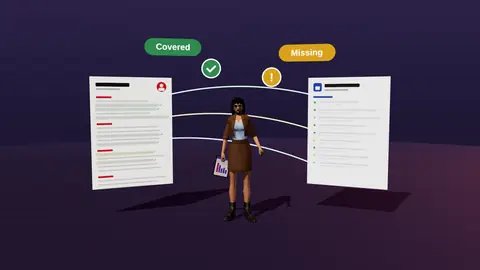
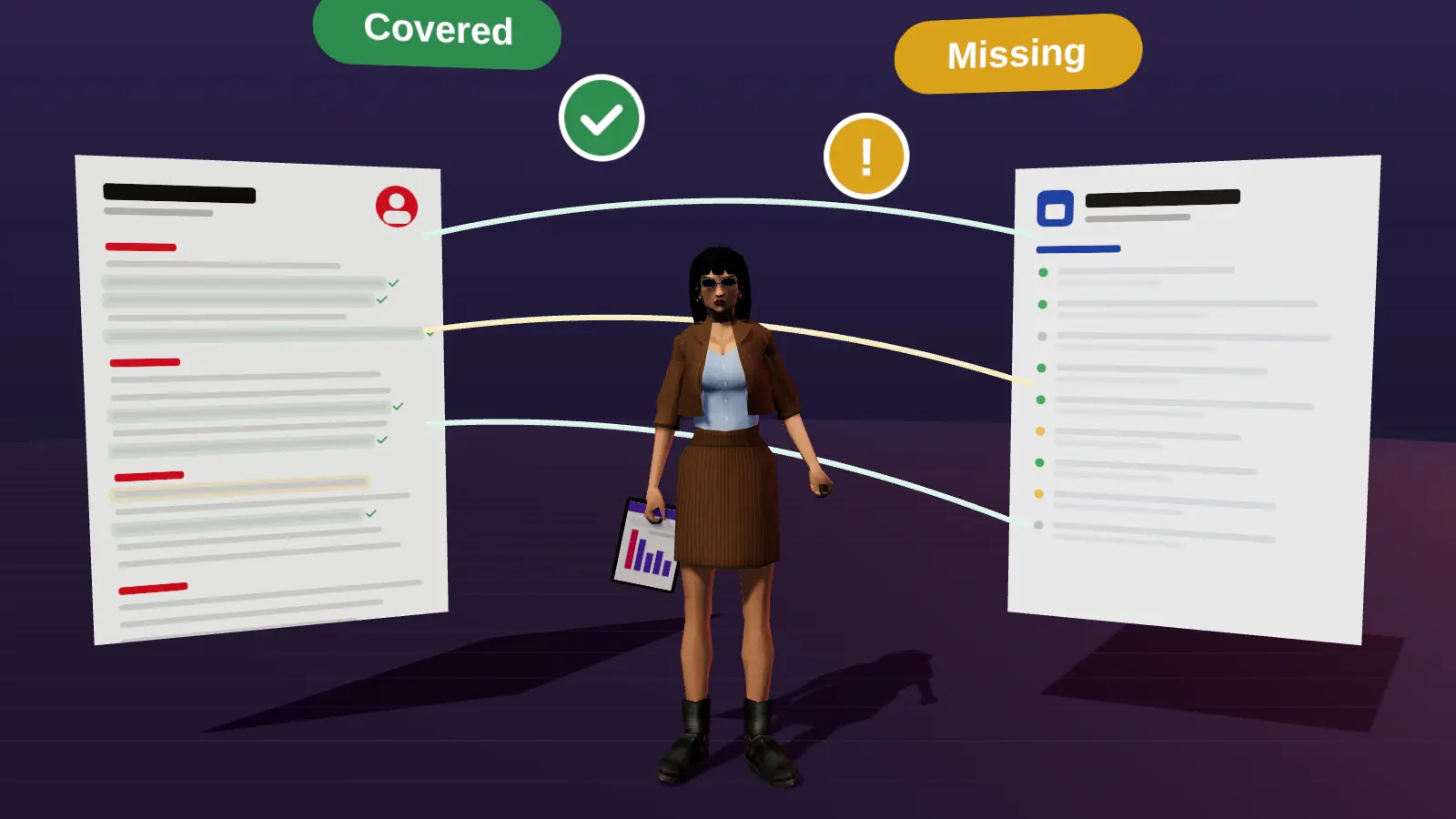
Paste a job link, add your resume and get a requirement-by-requirement report.
A simple decision rule
| Your situation | Suggestion |
|---|---|
| Fewer than 10 applications planned | Start with free tools and manual checks |
| 10 to 50 targeted applications | A low-cost vacancy-based tool saves hours |
| Career change or senior role | Consider a human reviewer plus a tool |
Cost of time
If tailoring one resume by hand takes 40 minutes and a tool brings it to 10, then twenty applications save about ten hours. Compare that with the price, not with zero.
What free tools do well
Free checkers are good for fast sanity checks: is the file readable, are the headings standard, is the length reasonable, are there obvious typos. They cost nothing, need little commitment and are a sensible first step if you have never reviewed your resume critically. For a simple, well-structured resume applying to a common role, that may be all you need.
Where free options usually run out
- Matching against a specific vacancy, which needs more processing and care.
- Evidence for each finding, so you know why something is flagged.
- Saved versions linked to individual applications.
- Export without limitations or watermarks.
- Guidance that rewrites weak lines while keeping facts true.
Those gaps matter most when you are targeting a role you really want.
How to judge whether paying makes sense
| Question | If yes |
|---|---|
| Am I applying to roles where one extra interview matters a lot? | Paid depth can be worth it |
| Do I have more than five applications planned this month? | Tailoring workflow saves hours |
| Is the plan a one-time payment rather than a subscription? | Lower risk of forgetting to cancel |
| Can I see what I get before paying? | You avoid paying blind |
A sensible path
Start with something free to catch obvious problems. If you find yourself tailoring the same resume many times or you lack confidence in your match, move to a tool built around vacancies. See JobAny pricing for how the Start plan works: a one-time payment, no subscription. Whatever you choose, keep the master resume in your own files so you are never locked in.
Hidden costs of free tools
Free tools may collect data, limit exports, show advertising or push upgrades at the last step. Read the terms, and decide how much your time is worth if you must work around limits.
Hidden costs of paid tools
Subscriptions can renew automatically, features may sit behind higher tiers, and cancelling may be hard. Check the billing terms before you enter payment details.
A five-question checklist before you decide
- What is my goal this month? A handful of well-matched applications needs different help from a wide search.
- How much time can I give each application? If it is under fifteen minutes, favour tools that speed up routine work.
- What is a wrong decision likely to cost? Paying blind or sending unreadable files costs more than a short trial.
- Who owns my data afterwards? Prefer tools where you can export and delete.
- Can I verify the result myself? Anything that cannot be explained should not drive your choices.
Write down your answers before comparing options, then score each against them. The best choice is rarely the one with the longest feature list; it is the one that fits the next four weeks of your search. Revisit the decision when your situation changes, for example after your first interviews or when you start targeting a new role family.
Key terms explained
- ATS
- Applicant tracking system, software employers use to collect, store and search applications.
- Parsing
- The step where software reads your file and sorts the text into fields such as name, employers and dates.
- Tailoring
- Adjusting emphasis and wording of the same true facts for one specific vacancy.
- Requirement coverage
- How many of a vacancy's main requirements your resume proves with evidence.
- Master resume
- Your complete private version with every role and result, from which you build shorter tailored copies.
- Warm introduction
- A recommendation or message passed through someone who already knows both sides.
- Reply rate
- Replies divided by applications sent, the clearest signal of whether your approach works.
Knowing these terms makes it easier to read job ads, compare tools and judge advice you find online, because many claims depend on what exactly is being measured.
Watch the billing model
Check whether it is a one-time payment or a subscription, and how to cancel. JobAny's Start plan is a one-time $1 payment with no subscription.
See pricing explained.
Check your resume against a real vacancy
Add your resume and a job link. JobAny shows which requirements are covered, what is missing, what a recruiter sees first and whether the file reads cleanly. Start costs $1, no subscription.
Frequently asked questions
Is free good enough?
For a first look, yes. For tailoring at volume, a paid tool may save time.
Are paid tools more accurate?
Not automatically. Look at the explanations.
Can I mix free and paid?
Yes.
How do I avoid surprise charges?
Read the billing terms before paying.
Is there a refund?
Check the terms of the provider.
Do free tools sell my data?
Check each provider's privacy policy.
Is a one-time payment better than a subscription?
For a time-limited job search, usually yes.
Can I try before paying?
Look for a clear preview of the findings.
Is a free checker enough for ATS?
It can catch format problems, but not whether you match a particular vacancy.
Will paid tools guarantee interviews?
No tool can; they reduce avoidable misses.
Should I pay monthly?
Prefer one-time or clearly cancellable plans while your search is short.
Keep reading