Resume checker alternatives: the types of tools
Instead of ranking brands, this page maps the categories of tools you will meet and what each is best for, so you can combine them sensibly.
- Keyword counters are quick but shallow.
- ATS scanners check readability.
- Vacancy analyzers check fit.
- Human reviewers add judgement.
Categories
| Type | Good for | Limits |
|---|---|---|
| Keyword counter | Quick term check | Misses meaning and context |
| ATS scanner | Readability and layout | Does not judge fit |
| Vacancy analyzer | Match against a real job | Needs a vacancy |
| AI builder | Fast drafts | Needs fact-checking |
| Template editor | Clean layout | No analysis |
| Human reviewer | Judgement and tone | Slow, subjective |
Combining them
- Draft with a builder or template.
- Run a scanner for readability.
- Analyse against the vacancy.
- Ask a person to read the top third.
- Tailor and send.
Where JobAny sits
JobAny combines a vacancy analyzer, readability check, factual builder and tailoring in one flow. See how it works.
Paste a job link, add your resume and get a requirement-by-requirement report.
How to combine tools in practice
| Goal | Combination |
|---|---|
| First resume | Template or builder plus vacancy analysis |
| Tailoring at volume | Master resume plus vacancy analyzer |
| Career change | Analyzer plus a human reviewer |
| Applying abroad | Local-norm guide plus readability check |
What no tool replaces
Your own judgement about what is true and relevant, and the human route: referrals and conversations.
Categories of alternatives, without naming names
- Format-only scanners: check readability and structure, no vacancy needed.
- Keyword matchers: compare terms between a vacancy and a resume.
- All-in-one builders: templates plus some checks and exports.
- Human reviewers: career coaches or experienced recruiters who give qualitative feedback.
- Peer review: friends or mentors in the same field.
Strengths and limits of human review
A good human reviewer understands your industry, notices tone and spots odd career narratives that software cannot. But feedback takes time, quality varies, and people may impose personal taste. Use human review for a final read after the content is solid, and ask specific questions: What would you remember after ten seconds? Which line is weakest? What is missing for this role?
Putting together a review stack
| Stage | Best tool |
|---|---|
| Format and readability | Scanner |
| Vacancy match and evidence | Vacancy-based analysis |
| Wording and tone | Builder plus your own edit |
| Final sense check | Human reviewer |
No single tool covers every stage; using each where it is strongest costs less than it sounds.
Making your own decision
List your priorities: depth, price, speed, privacy. Test two tools with the same resume and vacancy and compare the output. Choose the one whose feedback you can act on within an hour. Read how to choose a checker for a full checklist, and keep your master resume independent of any tool.
When to skip tools entirely
If your resume is one page, clear and tailored by hand, and you have a trusted reviewer in the field, you may not need software. Tools help most when volume, speed or objectivity matter.
A five-question checklist before you decide
- What is my goal this month? A handful of well-matched applications needs different help from a wide search.
- How much time can I give each application? If it is under fifteen minutes, favour tools that speed up routine work.
- What is a wrong decision likely to cost? Paying blind or sending unreadable files costs more than a short trial.
- Who owns my data afterwards? Prefer tools where you can export and delete.
- Can I verify the result myself? Anything that cannot be explained should not drive your choices.
Write down your answers before comparing options, then score each against them. The best choice is rarely the one with the longest feature list; it is the one that fits the next four weeks of your search. Revisit the decision when your situation changes, for example after your first interviews or when you start targeting a new role family.
Key terms explained
- ATS
- Applicant tracking system, software employers use to collect, store and search applications.
- Parsing
- The step where software reads your file and sorts the text into fields such as name, employers and dates.
- Tailoring
- Adjusting emphasis and wording of the same true facts for one specific vacancy.
- Requirement coverage
- How many of a vacancy's main requirements your resume proves with evidence.
- Master resume
- Your complete private version with every role and result, from which you build shorter tailored copies.
- Warm introduction
- A recommendation or message passed through someone who already knows both sides.
- Reply rate
- Replies divided by applications sent, the clearest signal of whether your approach works.
Knowing these terms makes it easier to read job ads, compare tools and judge advice you find online, because many claims depend on what exactly is being measured.
Choosing
Use the criteria in how to choose a resume checker.
Check your resume against a real vacancy
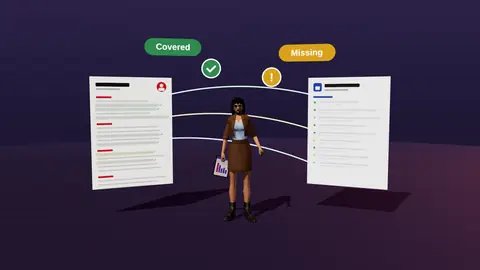
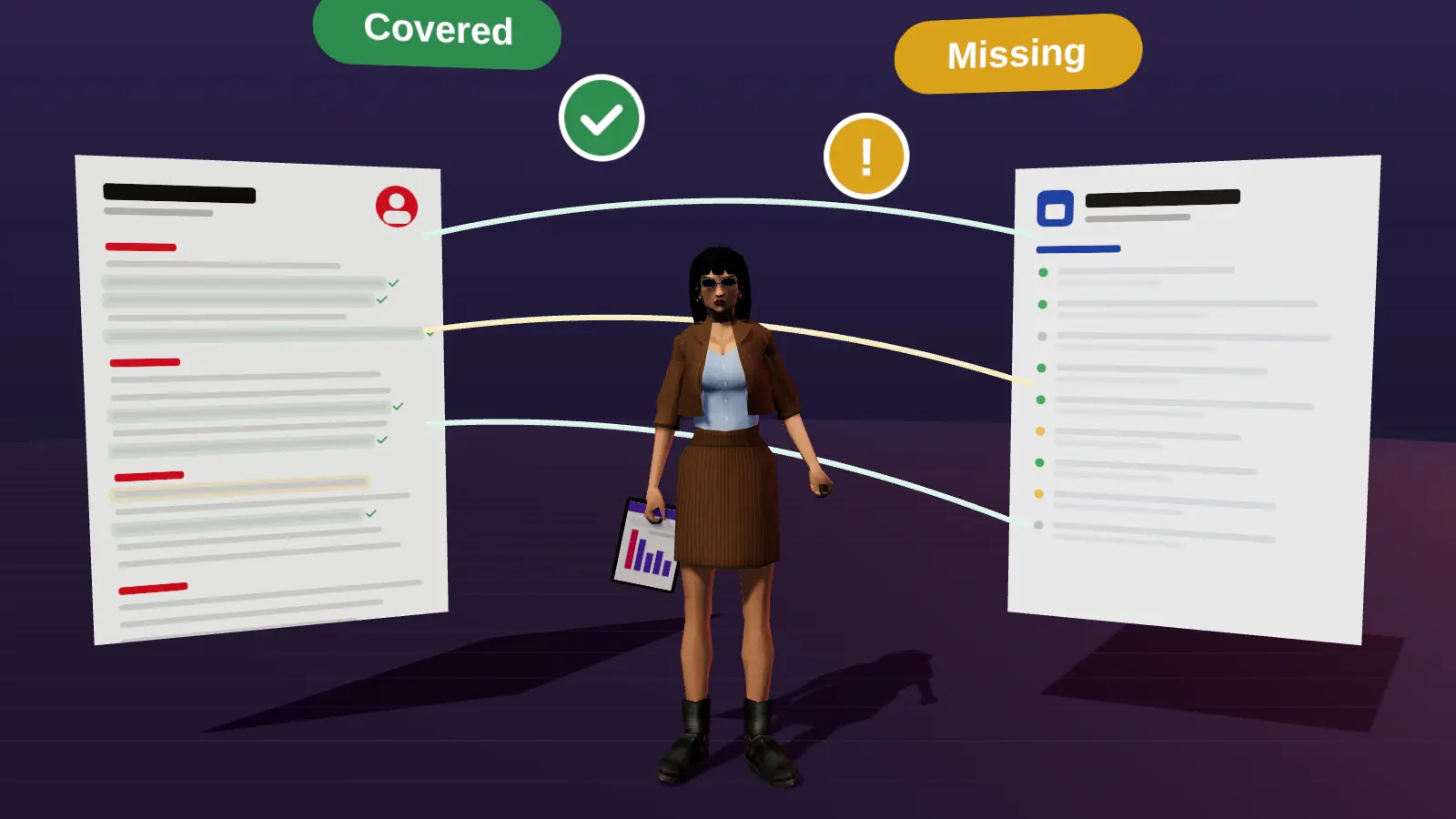
Add your resume and a job link. JobAny shows which requirements are covered, what is missing, what a recruiter sees first and whether the file reads cleanly. Start costs $1, no subscription.
Frequently asked questions
Do I need more than one tool?
Often a builder plus a vacancy analyzer is enough.
Are human reviews worth it?
For senior roles or career changes, yes.
Which tool should I start with?
Start with the one that compares to your target vacancy.
Are free alternatives fine?
For a first pass, yes.
Is there a perfect tool?
No, combine tools sensibly.
Is an expensive tool better?
Not necessarily; judge by explanations and fit to your need.
Do I need a human reviewer?
Helpful for senior or career-change resumes.
Can tools conflict?
Their advice can differ; prefer the advice tied to your real vacancy.
Is a human reviewer better than software?
Different strengths; use each at the right stage.
Should I pay for coaching?
Only if you want deeper strategy; compare cost with what you need.
Can I rely on friends' feedback?
It helps, especially from people in your field.
Keep reading