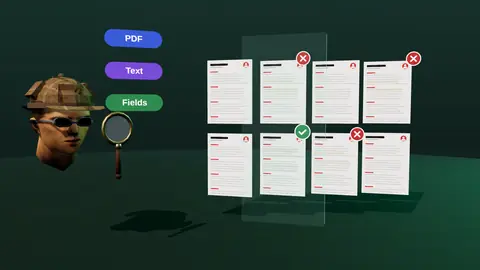
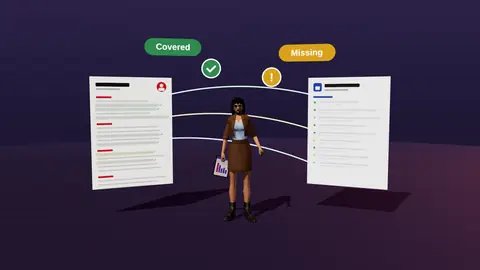
How to choose the best resume checker
Resume checkers vary from a keyword counter to a full vacancy analysis. Rather than naming a winner, this guide gives you the criteria that separate useful tools from flattering ones, so you can judge any checker, including ours.
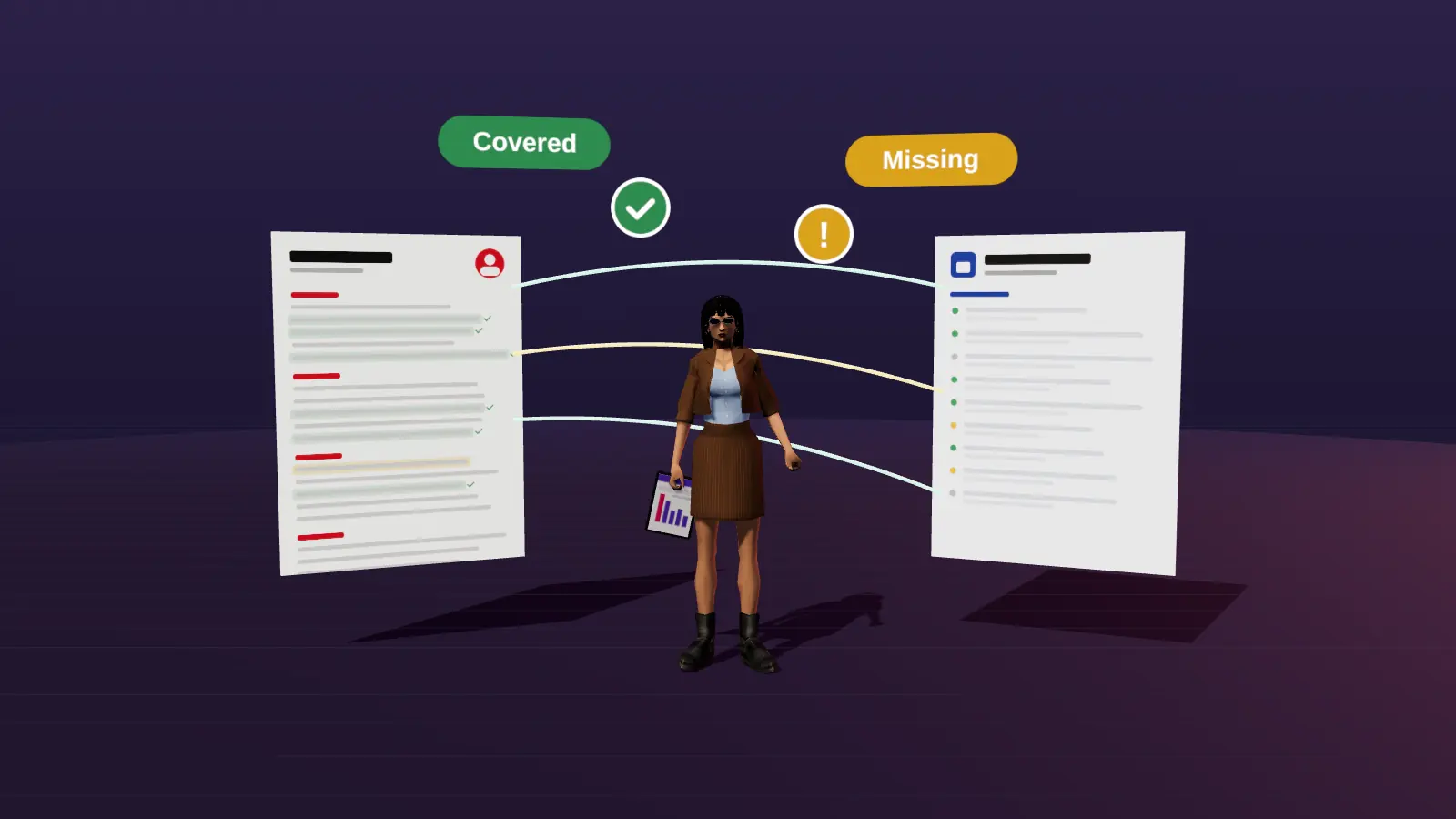
- Prefer checkers that compare against a real vacancy.
- Be wary of unexplained universal ATS scores.
- Check privacy, export quality and pricing.
- Test on a resume you know the weak spots of.
Seven criteria
| Criterion | Good sign | Red flag |
|---|---|---|
| Vacancy-based | Compares to a pasted job description | Only a generic score |
| Explainable | Each finding says why and how to fix | A number with no reasons |
| Honest on ATS | Explains readability and match separately | Claims to know every employer's ATS |
| Truthful edits | Suggests wording from your facts | Invents experience or keywords |
| Privacy | Clear data policy and deletion | Vague data use |
| Export quality | Clean text PDF or DOCX | Image-based or layout-heavy export |
| Pricing | Clear, no surprise renewals | Hidden subscription |
A 10-minute test
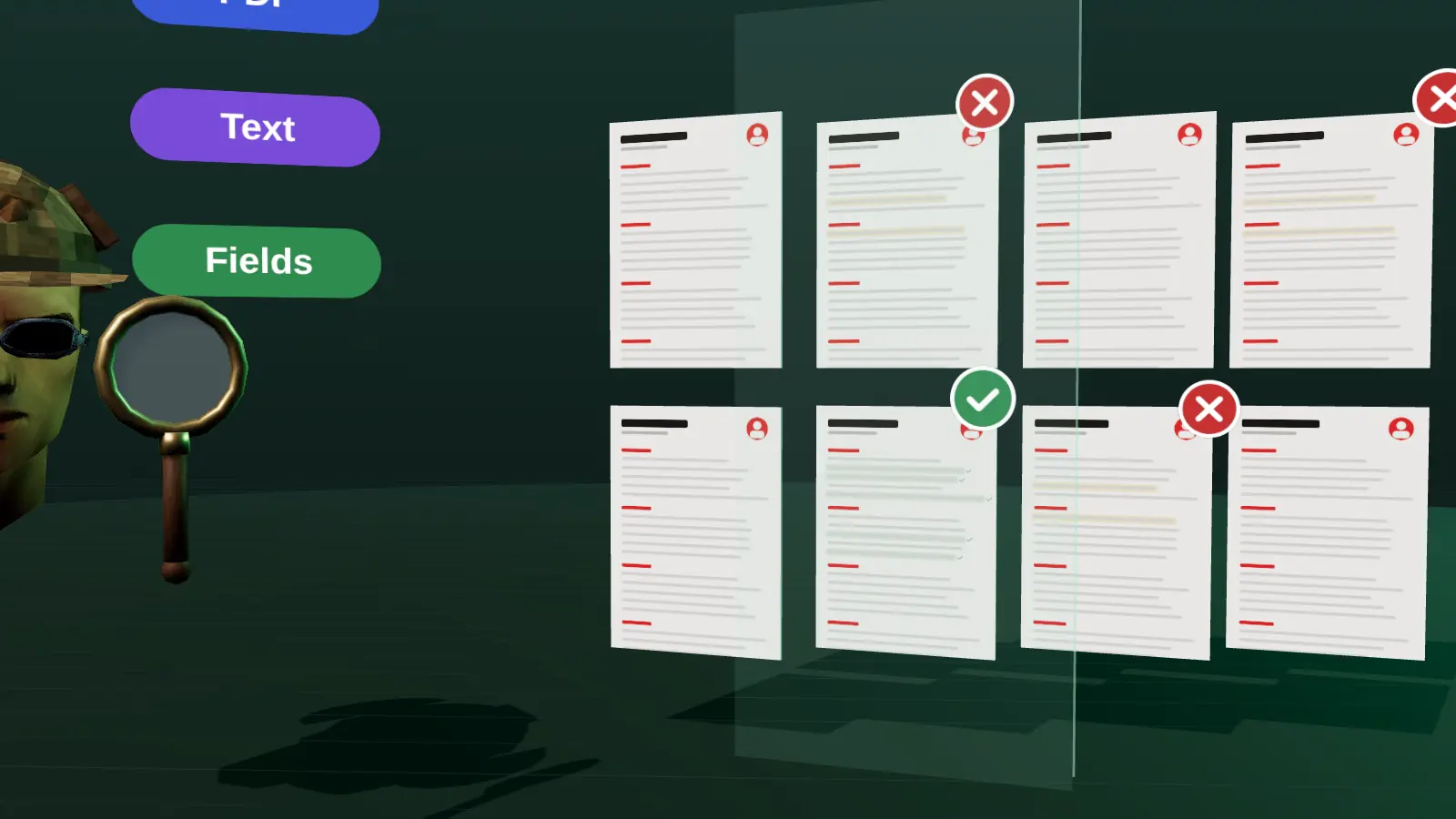
- Take a resume with weaknesses you know about (e.g. no numbers).
- Run it with a real vacancy.
- See whether the checker finds them and explains why.
- Check whether its suggested edits are true to your facts.
- Export and test the text copies in order.
Where JobAny fits
JobAny is built around the criteria above: it compares against a vacancy, marks requirements as covered, hidden or missing, avoids fake ATS scores and uses a clean export. See how the analysis works.
Paste a job link, add your resume and get a requirement-by-requirement report.
Questions to ask before you upload
- Does it compare my resume with a specific vacancy?
- Does each finding explain why and how to fix it?
- Does it separate readability from match?
- Can I delete my data?
- Is the price one-time or recurring?
Common traps
- A big green score that rises when you add keywords, whether or not they are true.
- Free scans that hide the useful findings behind a paywall you only see afterwards.
- Auto-rewrites that add claims you cannot defend.
- Templates with graphics that fail text extraction.
A 10-minute test you can run on any checker
- Take one real resume and one real vacancy you care about.
- Run the checker and note whether feedback mentions the vacancy at all or stays generic.
- Look for evidence: does it quote lines from your resume and explain why they match or miss?
- Check whether suggestions invent facts. Anything you did not do must never appear.
- Export the file and paste it into a plain text editor to confirm it stays readable.
- Note what happens to your data: can you delete it, is it used to train anything, is it shared?
A tool that passes all six is worth your time, whatever its price or brand.
Red flags that should make you walk away
- A single universal score with no explanation of how it was calculated.
- Promises of guaranteed interviews or guaranteed ATS passing.
- Feedback that is identical for every vacancy you paste.
- Forced sign-up or payment before you can see any result at all.
- Auto-rewriting that adds metrics, tools or achievements you never mentioned.
- Unclear data policy or no way to delete your resume.
Matching the tool to your situation
| Situation | What to prioritise |
|---|---|
| Applying to a few dream roles | Deep vacancy match with evidence |
| Applying broadly | Speed, tailoring workflow, tracker |
| Career change | Translating old skills into new terminology |
| First job | Structure help and guided interview |
| Returning after a gap | Honest handling of dates and recent activity |
What a good result should leave you with
After a checker, you should know three things: which requirements of this vacancy your resume already proves, which it hides, and which are genuinely missing. You should also know what to change first. If you finish with only a number, you have learned little. If you finish with a short list of concrete edits tied to the vacancy, the tool has done its job. Then compare it with the other tools in checker alternatives.
Questions to ask a vendor
- How is each finding produced and explained?
- Do you train models on my resume?
- Can I delete everything in one step?
- What is included at each price?
A five-question checklist before you decide
- What is my goal this month? A handful of well-matched applications needs different help from a wide search.
- How much time can I give each application? If it is under fifteen minutes, favour tools that speed up routine work.
- What is a wrong decision likely to cost? Paying blind or sending unreadable files costs more than a short trial.
- Who owns my data afterwards? Prefer tools where you can export and delete.
- Can I verify the result myself? Anything that cannot be explained should not drive your choices.
Write down your answers before comparing options, then score each against them. The best choice is rarely the one with the longest feature list; it is the one that fits the next four weeks of your search. Revisit the decision when your situation changes, for example after your first interviews or when you start targeting a new role family.
Free or paid?
Read free vs paid resume checkers for what each typically offers.
Check your resume against a real vacancy
Add your resume and a job link. JobAny shows which requirements are covered, what is missing, what a recruiter sees first and whether the file reads cleanly. Start costs $1, no subscription.
Frequently asked questions
Is a higher score always better?
Only if you know what it measures. Prefer findings you can act on.
Can a checker guarantee interviews?
No tool can.
Should I use more than one?
A second opinion can help, but avoid editing for each tool's quirks.
Do checkers store my resume?
Check the privacy policy before uploading.
Is a human review better?
Both help; use a tool for speed and a person for judgement.
How do I compare two checkers fairly?
Run the same resume and vacancy through both and compare the explanations, not the scores.
Is brand reputation enough?
Judge by the criteria above, not by marketing.
How often should I re-check?
Each time you tailor for a new vacancy.
Do I need more than one checker?
Usually one that matches against vacancies is enough, plus a human reader for a final opinion.
Is a higher score always better?
Only if you understand what it measures; evidence-based findings are more useful than a number.
How often should I re-check?
After every substantial edit and for every new vacancy.
Keep reading