How to write a designer resume that is both stylish and readable
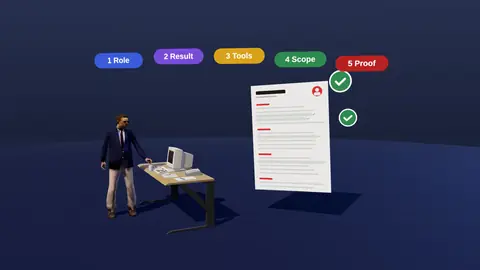
A designer's resume is judged on clarity, so ironically the best approach is restraint. Keep the resume text-first and readable by both people and parsers, and let your portfolio carry the visuals.
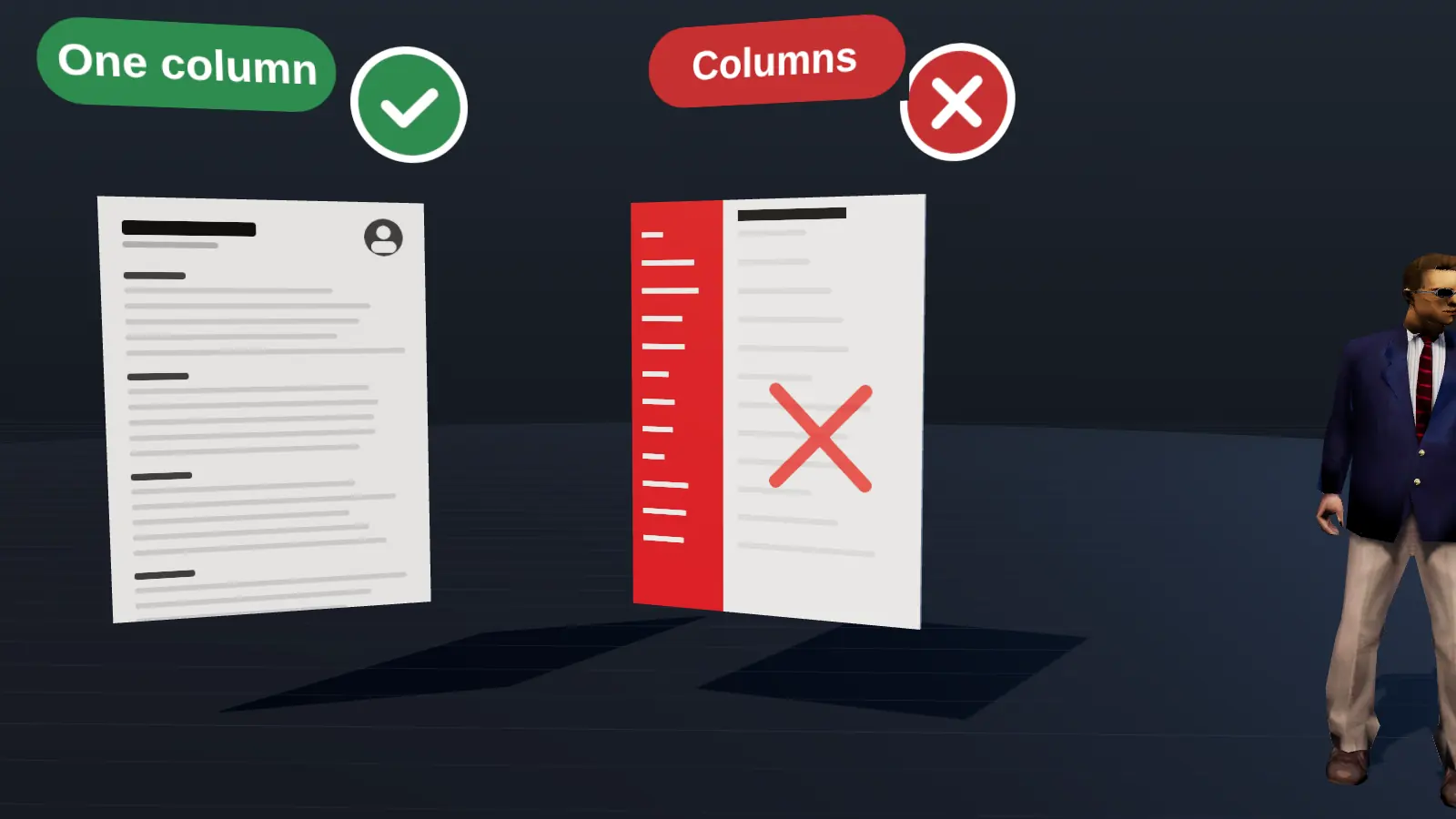
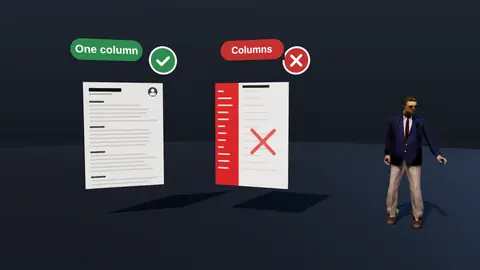
- Resume: clean typography, single column, real text.
- Portfolio: link prominently with relevant case studies.
- Describe problem, process, role and outcome.
- Match the design type: product, brand, UX research, motion.
Resume vs portfolio
| Resume | Portfolio | |
|---|---|---|
| Job | Prove fit quickly | Prove craft |
| Format | Plain, parseable | Visual |
| Content | Roles, results, tools | Case studies |
Heavy graphics, icons and skill bars hurt parsing; see ATS-friendly format.
Example bullets
Designed screens for a mobile app.
Led the redesign of checkout for a mobile app with 500k users, simplifying 6 steps to 3 and raising conversion by 11% after A/B testing.
Created brand materials.
Built a brand system for a seed-stage startup (logo, type, components) that cut design turnaround for marketing from 5 days to 1.
What to include
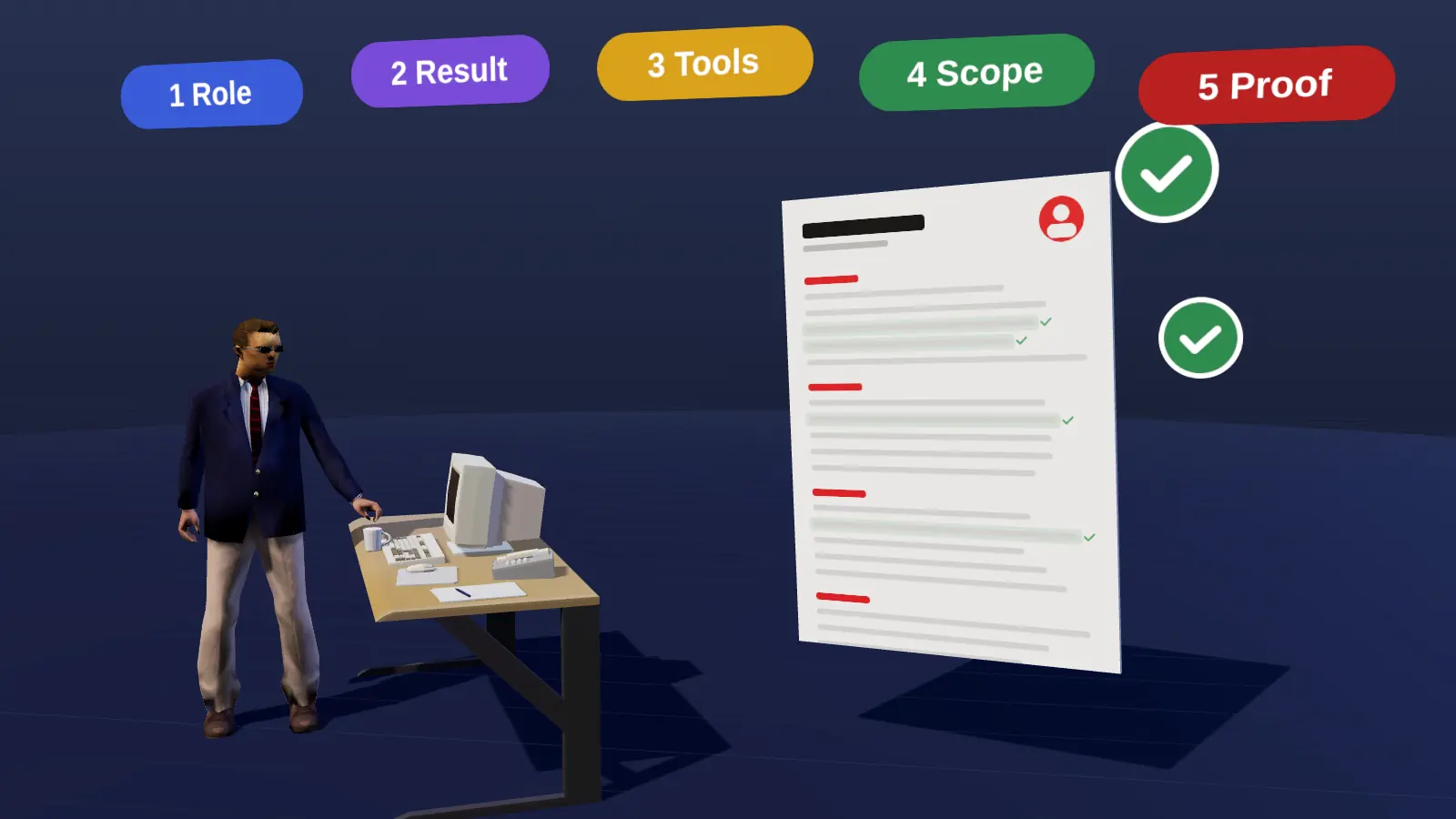
- Portfolio link at the top.
- Role in each project and team size.
- Tools: Figma, prototyping, research methods.
- Outcomes: metrics, usability findings, adoption.
Paste a job link, add your resume and get a requirement-by-requirement report.
Portfolio checklist
- Three to five case studies, not twenty.
- Each shows the problem, your role and the outcome.
- The best project is first.
- Works on mobile and loads fast.
- Link is on the resume and in the email.
Sample summary
Product designer with five years in fintech. Redesigned onboarding and payments flows used by 500k people, lifting completion by 11%. Strong in research, prototyping and design systems.
Resume versus portfolio
The portfolio shows the work; the resume explains scope, process and results. Keep the resume clean and simple so it survives parsers, and put the visual showcase in the portfolio. Include a short, plain link to the portfolio near the top so it is easy to find.
Bullets that explain impact
- Redesigned checkout for a mobile app with 200k users, reducing drop-off from 46% to 33%.
- Built a design system of 80 components in Figma, cutting design-to-dev handoff time by half.
- Ran 14 usability sessions that led to a simplified navigation and a 17% rise in task completion.
Case-study structure that works
- Context and constraints.
- Your role and team.
- Research and insights.
- Options considered and why you chose one.
- Outcome with numbers or qualitative proof.
- What you would do differently.
Tools and specialisations
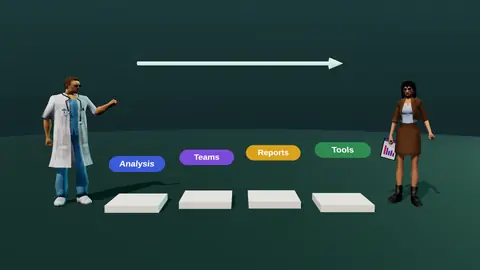
Mention your main tools (Figma, prototyping, research tools) and specialisations such as UX research, interaction, visual or brand design. Match the emphasis to the vacancy: a product designer role weights systems and testing, a brand role weights identity and campaigns.
Mistakes designers make
- Using images of text in the resume file.
- Missing portfolio link.
- Describing visuals without outcomes.
- Case studies that skip the problem.
A final check before you send a role-specific resume
- Does the headline name the role you want, in the employer's wording?
- Do the first three lines under the latest job prove the main requirement of the vacancy?
- Is every number real, with a baseline and a time frame?
- Are tools and skills grouped, ordered by relevance and also shown inside bullets?
- Do links work and point to current work?
- Does the file open cleanly and paste into a plain text editor in a sensible order?
- Would you be comfortable explaining every line in an interview?
Read the resume once as the hiring manager, in ten seconds, and note what you remember. If that is not your strongest result, move it to the top. Then read it again as a colleague who will work with you: do the lines sound like something a real person did? Specific, honest detail beats polished vagueness every time, in every field. Keep the master version updated after each new project so tailoring stays quick.
Key terms explained
- ATS
- Applicant tracking system, software employers use to collect, store and search applications.
- Parsing
- The step where software reads your file and sorts the text into fields such as name, employers and dates.
- Tailoring
- Adjusting emphasis and wording of the same true facts for one specific vacancy.
- Requirement coverage
- How many of a vacancy's main requirements your resume proves with evidence.
- Master resume
- Your complete private version with every role and result, from which you build shorter tailored copies.
- Warm introduction
- A recommendation or message passed through someone who already knows both sides.
- Reply rate
- Replies divided by applications sent, the clearest signal of whether your approach works.
Knowing these terms makes it easier to read job ads, compare tools and judge advice you find online, because many claims depend on what exactly is being measured.
File format
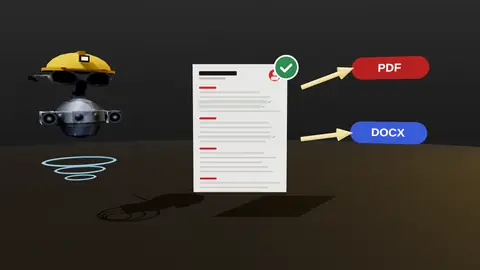
Send a plain text PDF; keep any designed version as an optional extra. See PDF or DOCX.
Check your resume against a real vacancy
Add your resume and a job link. JobAny shows which requirements are covered, what is missing, what a recruiter sees first and whether the file reads cleanly. Start costs $1, no subscription.
Frequently asked questions
Can I use a creative layout?
Offer a plain version for portals and an optional designed one for humans.
Do I need a portfolio?
Yes for most design roles.
What if my work is under NDA?
Describe the process and outcomes without confidential details.
Should I add colour?
Subtle accents are fine; avoid graphics that break text.
Length?
One page.
Should I send both PDF and portfolio link?
Yes, resume as PDF with the link inside.
How do I show process without long text?
Use short captions and key decisions.
Is a designed resume ever right?
As an extra for humans, never as the only version.
Should my resume be designed creatively?
Keep it simple; creativity belongs in the portfolio.
How many portfolio projects?
Three to five strong case studies are enough.
Do I include unpaid projects?
Yes, if they show relevant skills and you label them honestly.
Keep reading