How to write a resume for remote jobs
Remote hiring is competitive and employers worry about communication and self-direction. Your resume should show you deliver without being watched, and it should answer practical questions: time zone, language and work authorisation.
- State time zone, languages and where you can work.
- Show results delivered with little supervision.
- Mention async tools and written communication.
- Prove reliability with specific examples.
Logistics first
- Location and time zone (or overlap hours you can offer).
- Languages with levels.
- Work authorisation or contracting ability.
- Availability and notice period if asked.
Evidence of remote readiness
Worked in a distributed team.
Worked in a team across 5 time zones using async updates and written specs; shipped two releases on schedule with no more than two live meetings per week.
Tools and habits
List tools you actually use (Slack, Notion, Jira, Loom, GitHub) and describe habits: documentation, written updates, ownership. See skills section.
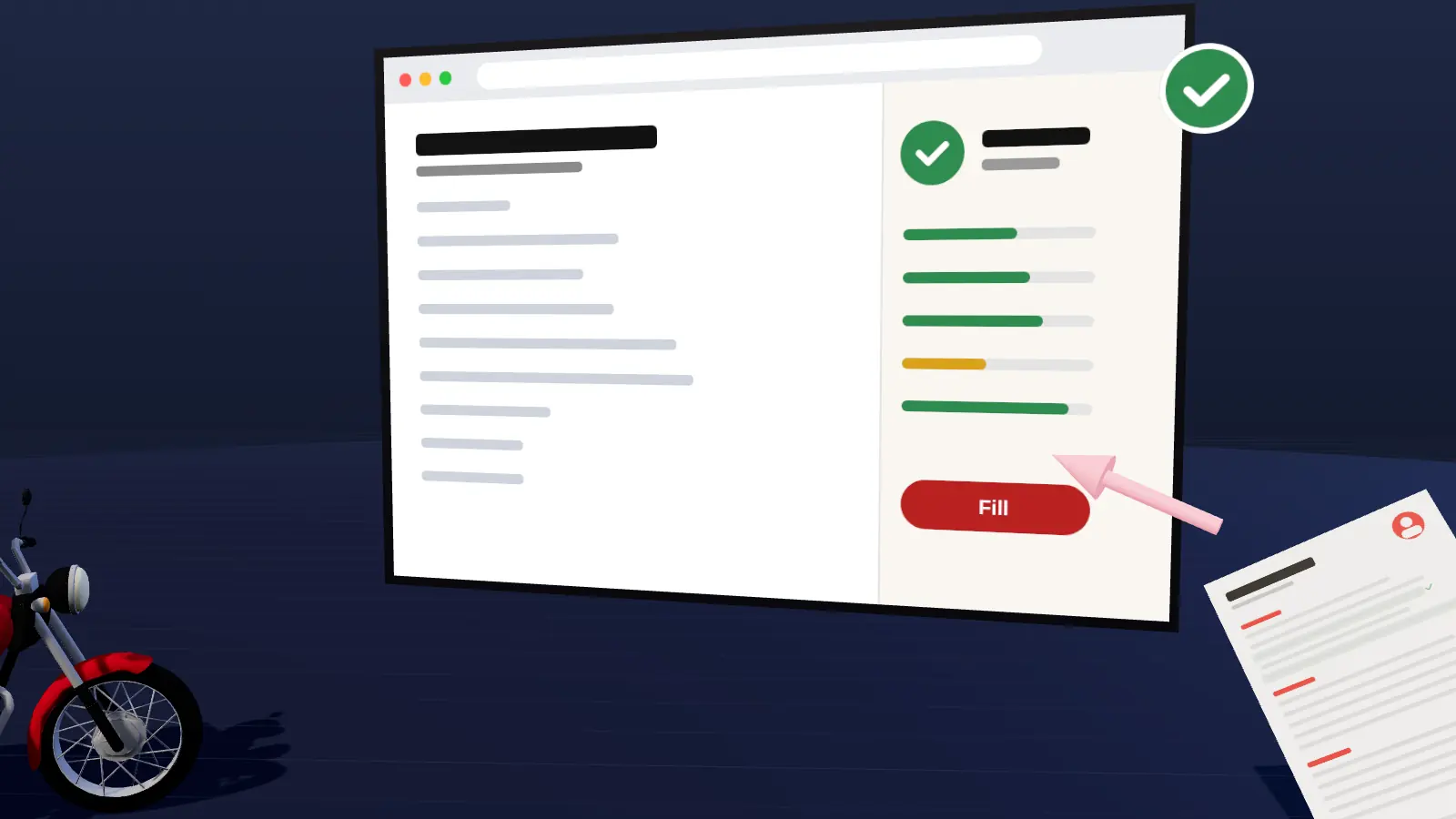
Paste a job link, add your resume and get a requirement-by-requirement report.
Sample header
Anna Kovalenko | Data Analyst | Bologna, Italy (CET) | Available for EU and UK overlap | English C1, Italian B2, Ukrainian native
Signals of self-management
- Projects delivered with written specs and async updates.
- Documentation or process improvements you wrote.
- Cross-time-zone collaboration.
- Results measured without daily supervision.
Signals remote employers look for
- Written communication: clear, concise and structured.
- Self-management: projects you owned without close supervision.
- Async collaboration: documentation, handoffs, tools.
- Time zone awareness and availability.
- Results you delivered while distributed.
Bullets that show remote readiness
| Skill | Bullet |
|---|---|
| Async work | Coordinated a team across four time zones using written specs and weekly demos, shipping 3 releases on schedule |
| Ownership | Owned onboarding docs for 25 new hires with 95% positive feedback |
| Tools | Moved team planning to Notion and Linear, reducing status meetings by 40% |
Location and time zone on the resume
State your city or country and working hours, because many remote roles restrict hiring by region or require overlap. Mention work authorisation if it matters. Being clear early saves time on both sides.
Where to find real remote roles
Use dedicated remote boards, company career pages and referrals. Be careful with offers that ask for payment or sensitive documents early. See where to find jobs for a wider list of channels.
Mistakes in remote applications
- Not stating time zone or availability.
- Generic claims about being self-motivated.
- No written sample or portfolio when relevant.
- Ignoring the company's remote policy.
A final check before you send a role-specific resume
- Does the headline name the role you want, in the employer's wording?
- Do the first three lines under the latest job prove the main requirement of the vacancy?
- Is every number real, with a baseline and a time frame?
- Are tools and skills grouped, ordered by relevance and also shown inside bullets?
- Do links work and point to current work?
- Does the file open cleanly and paste into a plain text editor in a sensible order?
- Would you be comfortable explaining every line in an interview?
Read the resume once as the hiring manager, in ten seconds, and note what you remember. If that is not your strongest result, move it to the top. Then read it again as a colleague who will work with you: do the lines sound like something a real person did? Specific, honest detail beats polished vagueness every time, in every field. Keep the master version updated after each new project so tailoring stays quick.
Key terms explained
- ATS
- Applicant tracking system, software employers use to collect, store and search applications.
- Parsing
- The step where software reads your file and sorts the text into fields such as name, employers and dates.
- Tailoring
- Adjusting emphasis and wording of the same true facts for one specific vacancy.
- Requirement coverage
- How many of a vacancy's main requirements your resume proves with evidence.
- Master resume
- Your complete private version with every role and result, from which you build shorter tailored copies.
- Warm introduction
- A recommendation or message passed through someone who already knows both sides.
- Reply rate
- Replies divided by applications sent, the clearest signal of whether your approach works.
Knowing these terms makes it easier to read job ads, compare tools and judge advice you find online, because many claims depend on what exactly is being measured.
Finding remote roles
Use remote-focused boards, company pages and referrals. See where to find jobs and referrals. Tailor each application with tailoring.
Check your resume against a real vacancy
Add your resume and a job link. JobAny shows which requirements are covered, what is missing, what a recruiter sees first and whether the file reads cleanly. Start costs $1, no subscription.
Frequently asked questions
Do I need prior remote experience?
It helps; otherwise show comparable autonomous work.
Should I mention my time zone?
Yes.
How do I handle visa or contractor status?
State clearly whether you work as an employee or contractor and where.
What do remote employers fear?
Poor communication and low self-direction; address both.
Length?
One to two pages.
Do remote roles need a different resume?
The same principles, plus clear logistics and async evidence.
How do I handle time zone limits?
State overlap hours you can offer.
Are remote jobs more competitive?
Often yes, so tailoring and referrals matter more.
Do I need a home office description?
No, but mention reliable equipment if asked.
Should I put 'remote' as my location?
Add your real region and time zone too.
Is previous remote experience required?
Not always; show self-management in other ways.
Keep reading