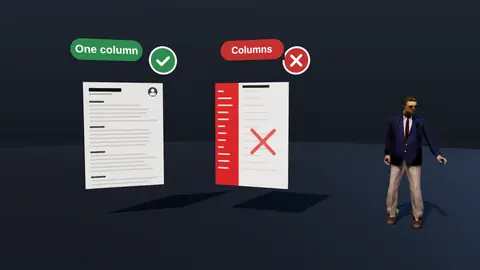
Resume tips for Ukrainians looking for work in Europe
European employers may not know your Ukrainian company or university. A good CV translates context: what the company does, the scale of your role, and equivalent titles. It also handles gaps honestly and shows languages and readiness to work.

- Add one line of context for each employer: sector, size, clients.
- Use internationally understood titles, keeping the original in brackets if needed.
- State languages with levels and your right to work.
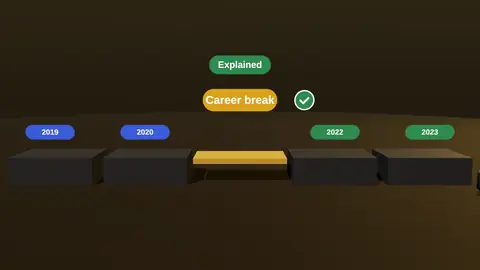
- Explain gaps briefly and honestly.
Translate context
Company X, Kyiv. Backend developer.
Company X (Kyiv), a 400-person fintech serving banks across Eastern Europe. Backend Developer: built payment APIs handling 2m transactions per day.
A one-line description helps recruiters judge scale and relevance.
Education and certification
- Give the degree name in English and the institution's English name.
- Add a brief note of equivalence if useful, only when accurate.
- List certifications that are recognised internationally.
- Note relevant courses or languages (CEFR levels).
Gaps and relocation
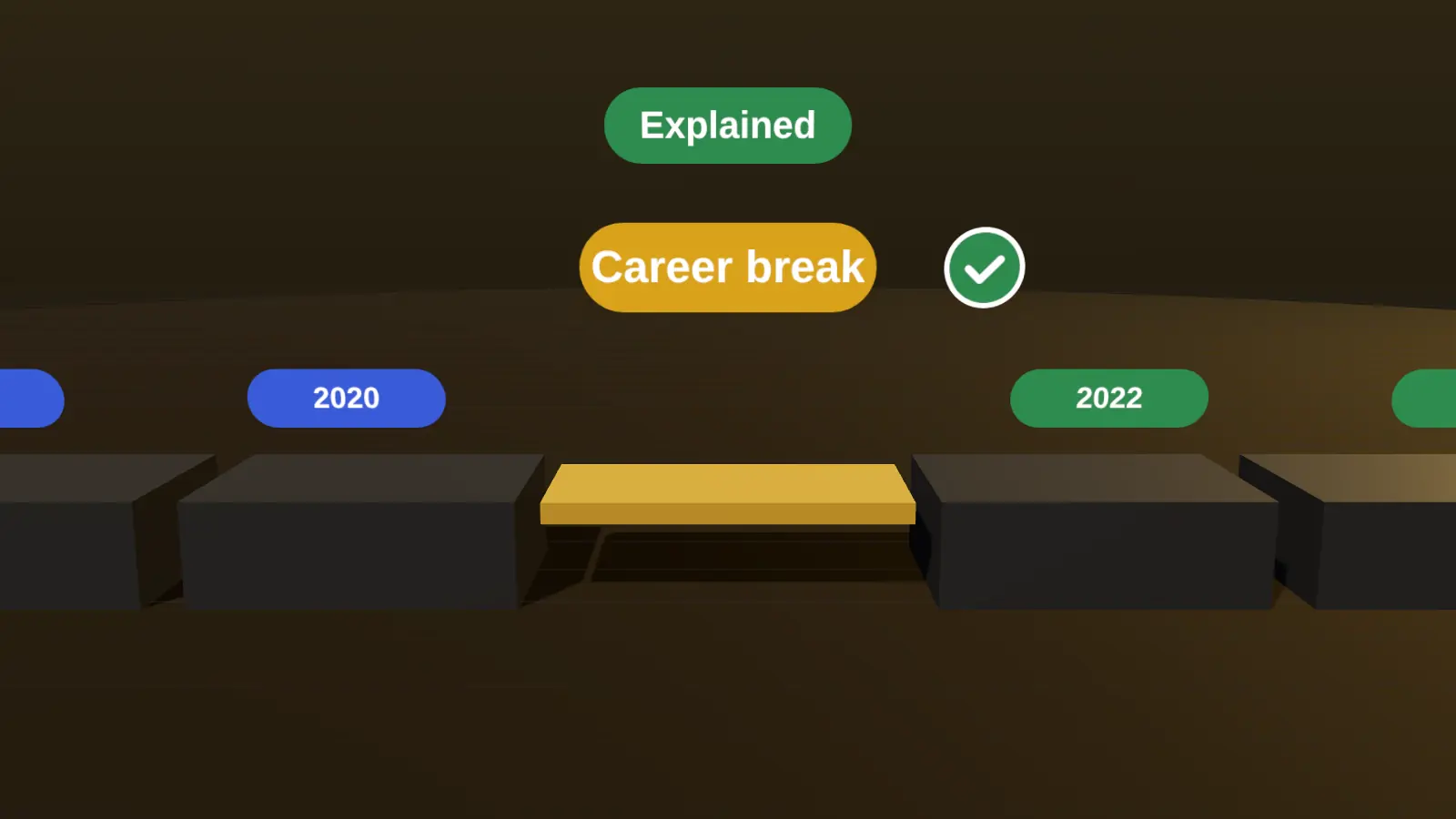
If there are gaps due to the war, relocation or study, state them briefly and factually, then focus on what you did and your readiness. See employment gaps. Be clear about your right to work where applicable.
Paste a job link, add your resume and get a requirement-by-requirement report.
Sample education line
MSc in Applied Mathematics, Taras Shevchenko National University of Kyiv, 2018. Thesis on time-series forecasting.
Describing work during disruption
- State the period and what you did: remote work, volunteering, study, relocation.
- Keep the tone factual and brief.
- Move to the skills and results you built.
For gaps in general, see employment gaps.
Translating your experience for European employers
Job titles, company names and education may be unfamiliar abroad. Add a short descriptor: company size or sector, scale of the team, what the product did. Use the closest equivalent job title and keep the original in brackets if needed. Explain degrees by level and field; if you know the European equivalent, state it.
Gaps, moves and relocation
If your career was interrupted by relocation, state it plainly with dates, then show what you did: courses, volunteering, freelance work or language study. Employers care most about what you can do now and how soon you can start. A short, factual line removes uncertainty.
Language and right-to-work lines
| Item | Example |
|---|---|
| Languages | Ukrainian (native), Russian (fluent), English B2, Italian A2 |
| Work status | Allowed to work in the EU under temporary protection or other valid status, if applicable |
| Availability | Available from a specific date, remote or on-site |
Practical next steps
- Rewrite your resume in the language of the target country or in English.
- Check your status and rights with official sources.
- Use diaspora and professional communities for introductions.
- Apply to roles where your language skills are an advantage.
See resume vs CV and warm intros.
Common mistakes
- Literal translation of job titles that confuses employers.
- Missing explanation of company scale.
- Long unexplained gaps.
- No language levels.
A final check before you send a role-specific resume
- Does the headline name the role you want, in the employer's wording?
- Do the first three lines under the latest job prove the main requirement of the vacancy?
- Is every number real, with a baseline and a time frame?
- Are tools and skills grouped, ordered by relevance and also shown inside bullets?
- Do links work and point to current work?
- Does the file open cleanly and paste into a plain text editor in a sensible order?
- Would you be comfortable explaining every line in an interview?
Read the resume once as the hiring manager, in ten seconds, and note what you remember. If that is not your strongest result, move it to the top. Then read it again as a colleague who will work with you: do the lines sound like something a real person did? Specific, honest detail beats polished vagueness every time, in every field. Keep the master version updated after each new project so tailoring stays quick.
Key terms explained
- ATS
- Applicant tracking system, software employers use to collect, store and search applications.
- Parsing
- The step where software reads your file and sorts the text into fields such as name, employers and dates.
- Tailoring
- Adjusting emphasis and wording of the same true facts for one specific vacancy.
- Requirement coverage
- How many of a vacancy's main requirements your resume proves with evidence.
- Master resume
- Your complete private version with every role and result, from which you build shorter tailored copies.
- Warm introduction
- A recommendation or message passed through someone who already knows both sides.
- Reply rate
- Replies divided by applications sent, the clearest signal of whether your approach works.
Knowing these terms makes it easier to read job ads, compare tools and judge advice you find online, because many claims depend on what exactly is being measured.
Adapt to local norms
Follow local CV norms (length, language, optional photo). See resume vs CV and CV for Italy. For remote roles, see resume for remote jobs.
Check your resume against a real vacancy
Add your resume and a job link. JobAny shows which requirements are covered, what is missing, what a recruiter sees first and whether the file reads cleanly. Start costs $1, no subscription.
Frequently asked questions
Should I translate my university name?
Use the English name and keep the original in brackets if helpful.
How do I explain a gap?
Briefly and factually, then emphasise what you did.
Do I need a photo?
Follow local custom; it is optional in many places.
Which language should the CV be in?
Match the vacancy: local language or English.
Can I apply for remote roles from abroad?
Yes, state your time zone and right to work.
Should I mention work authorisation?
Yes, briefly, if relevant to the application.
Can I list Ukrainian certifications?
Yes, with an English description.
Do I include both Ukrainian and English versions?
Prepare the version in the language of the employer.
Should I mention my status?
State work authorisation briefly if it affects hiring.
Do I translate my diploma?
Provide a translation when requested.
Is it OK to apply remotely from abroad?
Yes, many roles allow it; check the vacancy.
Keep reading