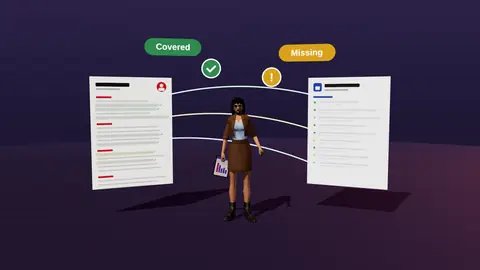
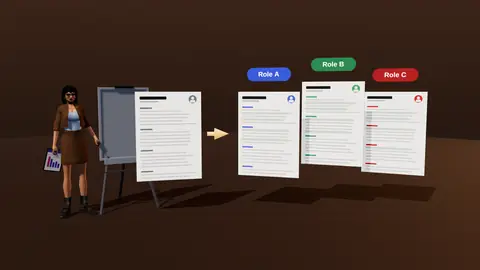
How to tailor your resume to a job description
Tailoring does not mean inventing experience. It means showing the part of your real experience that the employer is looking for, in the words they use, in the place a recruiter reads first. Done well it takes about twenty minutes per application.
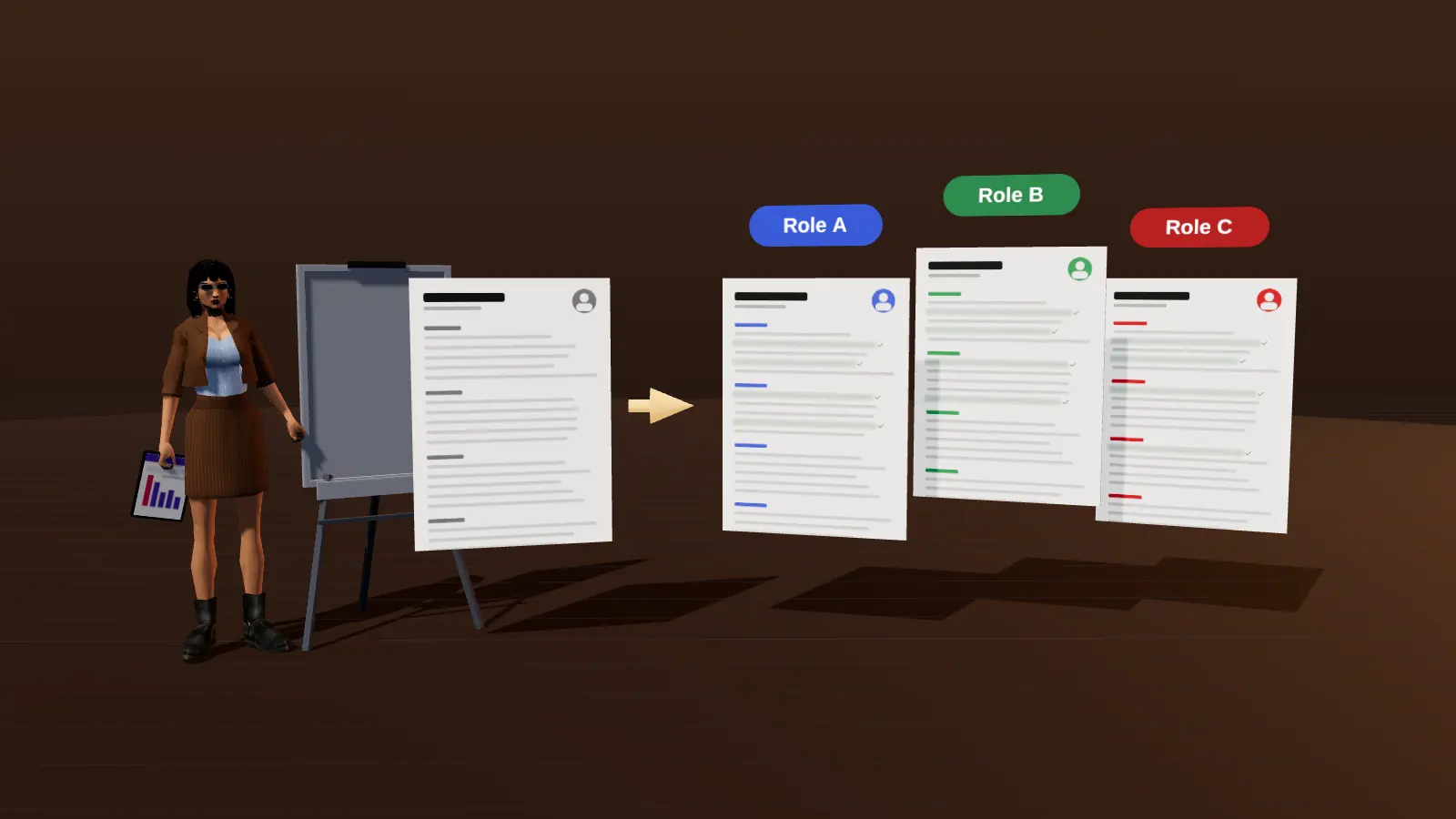
- Split the vacancy into requirements and map each one to real evidence.
- Rewrite the top third of page one first: headline, summary, first role.
- Keep facts identical; change order, emphasis and vocabulary.
- Flag genuine gaps instead of hiding them; never claim what you cannot discuss.
Why tailoring works
Recruiters screen a resume in seconds for a short list of things: the right kind of role, the main tools or skills, relevant scale and a sign that you have done something similar. Applicant tracking systems add a second layer: recruiters search and filter stored resumes by terms from the vacancy. A resume that states the same things in the employer's own wording is easier to find and quicker to approve.
The goal is a better match on the page, not a different person. If a requirement is true of you but buried on page two in different words, tailoring surfaces it. If it is not true of you, tailoring cannot fix it and should not try.
Step 1: turn the vacancy into a requirements list
Copy the job description into a document and sort it into three buckets:
- Must-have: phrases like "required", "you have", "X+ years of"
- Nice-to-have: "a plus", "preferred", "familiarity with"
- Context: company, team, product, domain, seniority, location and working mode
Then pick the five to eight items that appear most often or sit in the first half of the posting. These are your target requirements. The detailed method is in how to read a job description.
Step 2: map each requirement to evidence
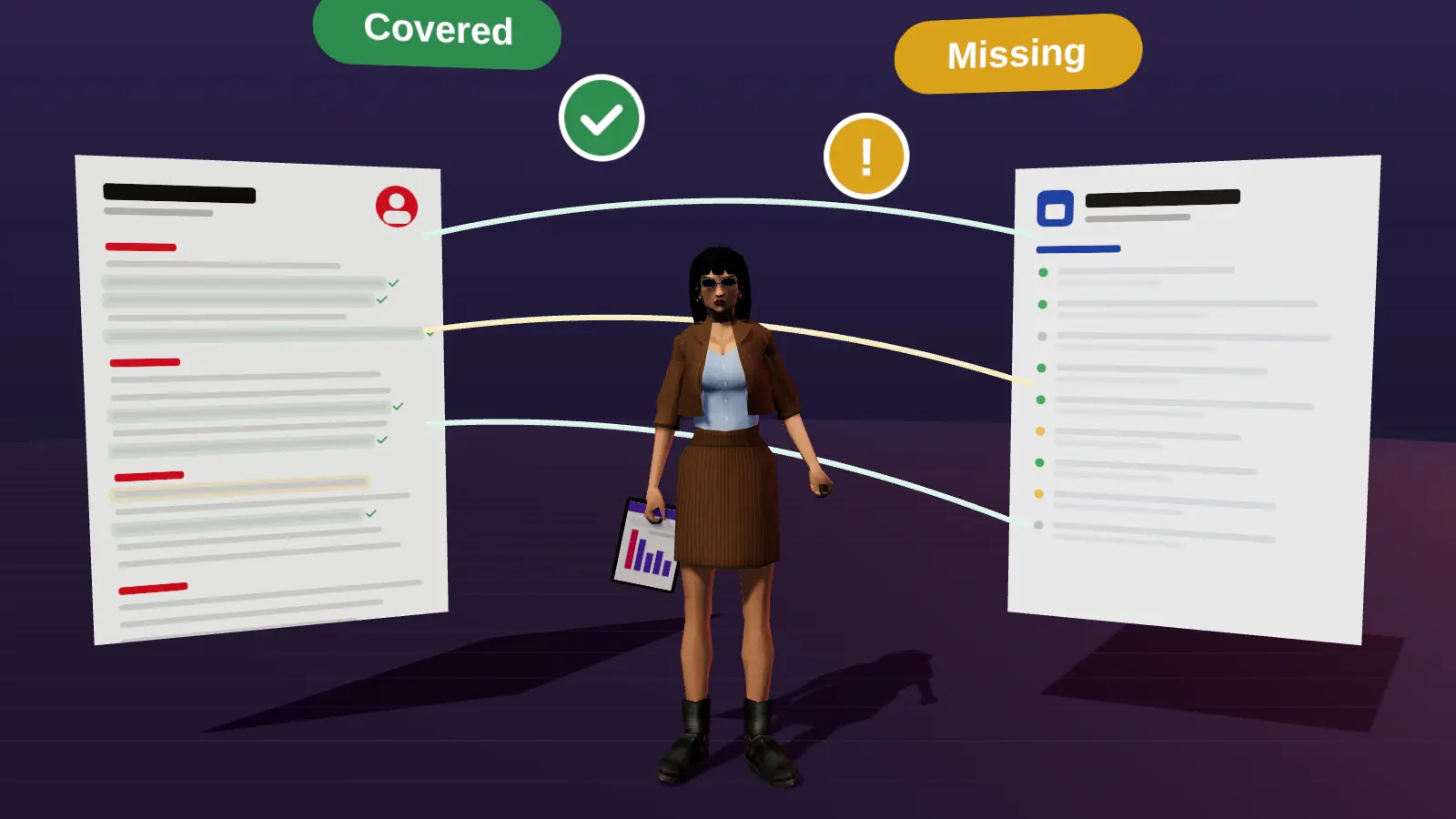
Make a two-column list: requirement on the left, your honest evidence on the right (a job, project, result, tool, course). Mark each row as one of three states:
| State | Meaning | What to do |
|---|---|---|
| Covered | Your resume already shows it clearly | Move it higher if it sits low |
| Hidden | You have done it, but the resume does not show it or uses other words | Add or reword a bullet using the vacancy's term |
| Missing | You have not done it | Do not claim it; mention a close equivalent or learning step only if true |
This table is the real work. The rewriting afterwards is quick because you already know what to say.
Paste a job link, add your resume and get a requirement-by-requirement report.
Step 3: rewrite the top third of page one
Concentrate effort where the reader looks first: the headline under your name, the summary and the first role.
Marketing specialist with experience in different channels and tools.
Performance marketer with 4 years running paid search and paid social for e-commerce. Manage a 120k EUR monthly budget in Google Ads and Meta Ads; cut cost per acquisition by 23% in 2024.
Use the vacancy's job title in your headline if it is an honest description of what you do ("Customer Success Manager", not "Client Happiness Hero"). Reorder bullets inside each role so the ones that match the vacancy come first.
Step 4: reuse the employer's vocabulary honestly
If the vacancy says stakeholder management and your resume says worked with other teams, the second may not match a search for the first even though you mean the same thing. Swap in their term where it is accurate. Do not paste the entire job description in white text, stuff a keyword block or list tools you have never used: recruiters spot it, and it fails the moment someone asks a follow-up question. See how to find the right keywords and where to place them.
Step 5: tune skills, order and length
Reorder the skills list so the ones named in the vacancy come first. Drop skills that are irrelevant to this role if the list is long. Check that the file still fits your page target; tailoring should not push you onto a third page. Update the file name to include the role, for example Marko-Shevchenko-Product-Manager.pdf.
Step 6: check before you send
Do a final pass that takes two minutes:
- Every must-have requirement is either shown clearly or consciously left out.
- Nothing on the page is false or inflated.
- The job title and company name in the cover text match this vacancy.
- The PDF text can be selected and copied in a sensible order.
Keep one master resume with everything you have done. Each tailored version is a selection and reordering of that master, which makes the next application faster.
A full worked example
Vacancy: Marketing Analyst. Must-haves: GA4, SQL, dashboards, A/B testing. Original summary: Marketing professional with experience in campaigns and reporting. Tailored summary: Marketing analyst with four years in e-commerce who built GA4 and SQL dashboards for a 12-person team and ran A/B tests that lifted checkout conversion by 9%.
The tailored version uses the vacancy's terms, quantifies the result and leads with relevance. The same facts, reordered and made specific.
Tailoring checklist
- Mirror the vacancy title in the headline where it is true.
- Surface the top five requirements in the summary and first role.
- Reorder bullets so the most relevant come first.
- Use the vacancy's terms for tools and methods.
- Trim bullets that do not help.
- Check dates, titles and numbers for accuracy.
Time-boxed tailoring
| Time | What to do |
|---|---|
| 10 minutes | Headline, summary, skills order |
| 25 minutes | Plus rewrite and reorder bullets in the top two roles |
| 45 minutes | Plus add a project or proof point and tailor the cover text |
Staying honest
Tailoring should always keep the facts true. If a requirement is missing, do not add it; either build real evidence or choose different roles. Recruiters and hiring managers probe claims, and a resume that overreaches loses credibility at the interview. Use JobAny tailoring to speed up the work and how to read a job description to decide what matters.
A realistic time budget
Reading the vacancy and building the requirements table takes about eight minutes. Rewriting the headline, summary and top bullets takes ten. Final checks take two. If a role needs much more than that, it is probably too far from your experience for the effort, which is itself useful information.
JobAny automates the tedious parts: it splits the vacancy into requirements, shows which are covered, hidden or missing, and drafts a tailored version from your real data for you to edit. See resume tailoring in JobAny.
Check your resume against a real vacancy
Add your resume and a job link. JobAny shows which requirements are covered, what is missing, what a recruiter sees first and whether the file reads cleanly. Start costs $1, no subscription.
Frequently asked questions
How much should I change my resume for each job?
Change the top third of page one (headline, summary, first role's bullets) and the order of skills. Keep the facts the same. For similar roles that is often enough.
Is it dishonest to use the same words as the job posting?
No, if the words describe something you really did. Mirroring vocabulary helps readers and search recognise a real match. Claiming experience you lack is the problem.
Should I tailor for every single application?
For roles you really want, yes. For lower-priority applications, a good base resume with a tailored headline and summary is a reasonable shortcut.
Do I need a different resume for every job title?
Keep a master resume and make a few role variants (for example Product Manager vs Product Owner), then fine-tune each application.
What if I meet only half the requirements?
Apply if the missing half is learnable or listed as nice-to-have. Flag gaps honestly and lead with the strongest evidence you have.
How different should each version be?
Mostly the top third and skill order; facts stay the same.
Do I need a different resume for every job?
A tailored version for jobs you really want.
Is it okay to use the vacancy's exact words?
Use key terms, not whole sentences.
How many versions should I track?
One per active application, labelled in your tracker.
Keep reading