How to read a job description
A job description is written by several people for several purposes: the hiring manager's wishes, HR boilerplate, legal text and a bit of marketing. Reading it well means separating what the team actually needs from the rest. Do that, and tailoring your resume becomes easy.
- Sort every line into must-have, nice-to-have, context or filler.
- Repetition and position show priority: the first half and the title matter most.
- Read the verbs for scope: own, lead, support, assist.
- Note red flags and questions to ask before you apply.
Anatomy of a posting
| Section | What it really is | How to use it |
|---|---|---|
| Title and level | Seniority and function | Match your headline to it if honest |
| About us / mission | Marketing | Use for the cover letter's 'why us' |
| Responsibilities | The daily work | Mirror verbs and tools in your bullets |
| Requirements | Filter and ranking basis | Your primary checklist |
| Nice to have | Tie-breakers | Cover what you honestly can |
| Benefits and legal text | Boilerplate | Skim for location, authorisation and salary |
Step 1: classify every line
Highlight in four colours:
- Must-have: "required", "you have", "X years", named tools without "or similar".
- Nice-to-have: "preferred", "a plus", "familiarity with".
- Context: domain, product, team size, stage, location, working mode.
- Filler: "dynamic team", "fast-paced", "self-starter". Ignore unless you have a specific example.

Step 2: find the real priorities
Employers rarely rank their needs, but the text shows it:
- Terms in the job title and first three bullets are top priority.
- Repeated terms ("SQL" three times) matter.
- Specific beats generic: "Looker dashboards for 50 stakeholders" signals real scope.
- Verbs show scope: own and lead imply independence; support and assist imply a junior role.
Paste a job link, add your resume and get a requirement-by-requirement report.
Step 3: read seniority signals
| Signal | Likely meaning |
|---|---|
| "Own the roadmap", "drive strategy" | Senior, independent |
| "Work with a senior team member" | Junior or mid, supervised |
| "Hands-on" | Expect to do the work yourself |
| Years required: 3 to 5 | Mid; often flexible by about a year |
| Long list of tools | A wish list; core tools usually appear first and repeatedly |
Years of experience requirements are often flexible. Strong, relevant results can offset a gap of a year or so; lacking the core domain rarely can.
Red flags and questions
- Very broad scope for one role ("manage marketing, sales and product") may mean unclear expectations.
- No salary range where it is customary or required by local law.
- "Unlimited" duties, "fast-paced" without team size, or constant reposting.
- Requirements that contradict each other (entry-level with ten years).
Questions to ask in the first call: what does success look like at 90 days, who will you work with and what is the process after this call?
The anatomy of a job description
Most postings have five parts: a company intro, the role summary, responsibilities, requirements and benefits. The company intro tells you about culture and stage. The summary gives the main purpose of the job. Responsibilities show what you would do day to day. Requirements separate must-haves from nice-to-haves. Benefits and compensation tell you about fit and expectations. Read all of them, because each shapes how you write your application.
Must-have versus nice-to-have
| Signal words | Likely meaning |
|---|---|
| Required, must have, essential | Hard filter |
| Strong knowledge of, proven experience | Core requirement |
| Preferred, a plus, nice to have | Flexible |
| Familiarity with, exposure to | Entry-level knowledge is enough |
Many employers list more requirements than they truly need. If you meet roughly most of the must-haves, applying can still be worthwhile, especially with good evidence.
Reading between the lines
- Repeated themes: the same skill in several places is a priority.
- Seniority verbs: own, define, lead versus support, assist.
- Team size and reporting line: signals scope.
- Urgency words: fast-paced and ambiguity often mean a startup environment.
- Vague lists: may mean the role is still being defined.
From reading to action
- Copy the posting and highlight the top five requirements.
- Mark each on your resume as shown, buried or missing.
- Rewrite the top third to surface the strongest matches.
- Prepare one story for each top requirement.
See keywords from a job description and automatic analysis.
Turn it into a resume plan
- List the top five to eight must-haves and the key nice-to-haves.
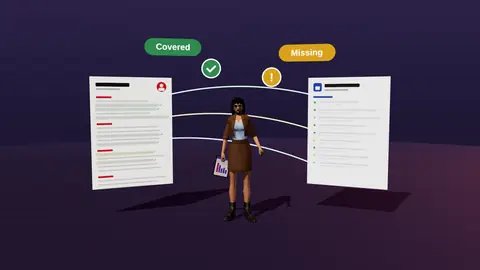
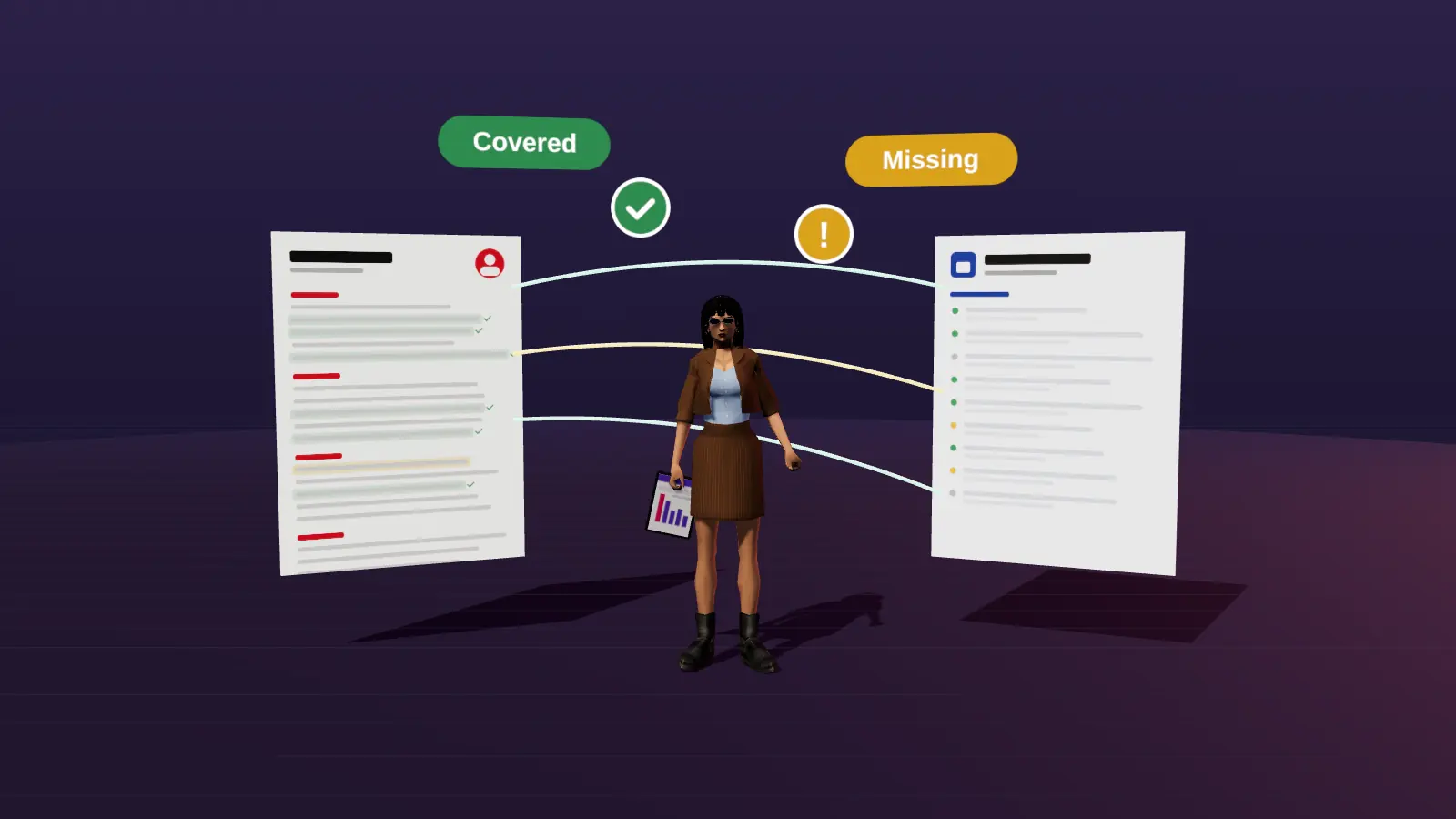
- Map each to your evidence and tag it covered, hidden or missing (match check).
- Rewrite the top third of page one with the employer's vocabulary where true (tailoring).
- Pull the keywords for the skills section (keywords).
JobAny reads the vacancy for you and produces the requirement list and the covered, hidden or missing status. See resume analysis for a vacancy.
Check your resume against a real vacancy
Add your resume and a job link. JobAny shows which requirements are covered, what is missing, what a recruiter sees first and whether the file reads cleanly. Start costs $1, no subscription.
Frequently asked questions
Should I apply if I meet 60% of the requirements?
Often yes, if the missing items are nice-to-haves or learnable. Missing the core must-haves is a bigger problem.
Do years of experience requirements matter?
They filter, but they are often flexible, especially with strong results.
What does 'or equivalent experience' mean?
That the employer will consider other routes to the same skill. Show equivalent evidence clearly.
How do I tell a must-have from a wish list?
Check position, repetition and wording like 'required'. Core tools appear early and repeatedly.
Should I save the posting?
Yes: postings disappear, and you will need the text for interviews.
Should I apply if I meet 60% of requirements?
Often yes, if the must-haves are covered and you can show evidence.
How do I spot a bad posting?
Vague duties, unrealistic stacks of requirements, or no pay information.
Can I ask the recruiter to clarify?
Yes, a short question can help.
Do I need to match every nice-to-have?
No.
Keep reading