Auto-apply vs applying manually
Sending hundreds of automated applications sounds efficient, but volume without fit usually produces silence. Careful manual applying is better targeted but slow. The practical answer is assisted applying: automate the repetition, keep control of decisions.
- Mass auto-apply: high volume, low fit, risk of poor answers.
- Manual: better fit, slow and repetitive.
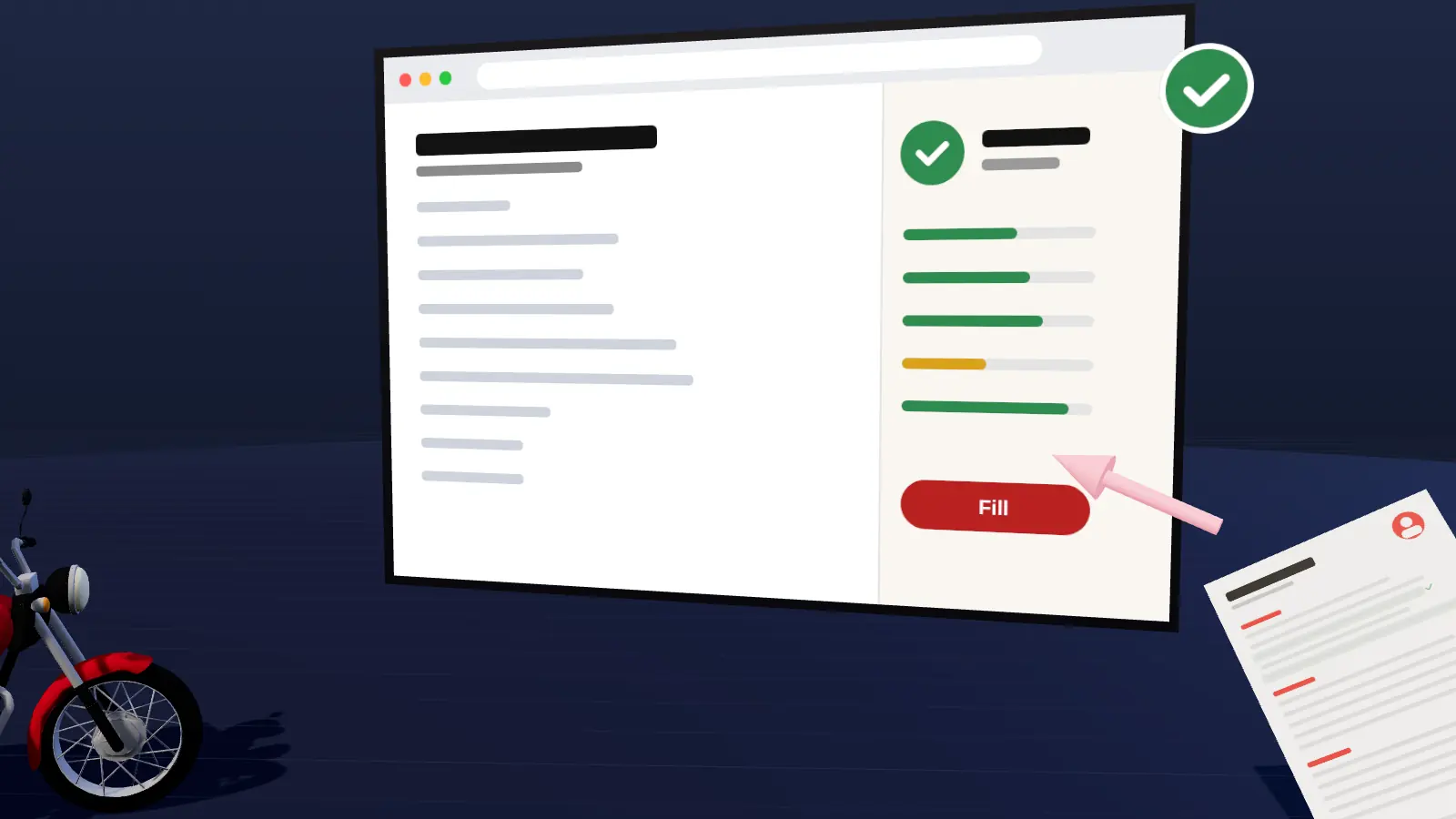
- Assisted: fill forms for you, you review and confirm.
- Quality of match matters more than quantity.
Compared
| Mass auto-apply | Manual | Assisted | |
|---|---|---|---|
| Speed | Very fast | Slow | Fast |
| Fit | Low control | High | High |
| Risk of wrong answers | High | Low | Low (you review) |
| Reply rate | Often low | Better | Better |
| Effort | Low | High | Medium |
Risks of fully automatic
- Wrong answers to eligibility and salary questions.
- Applying to roles you do not match.
- Generic documents.
- Some employers dislike obvious bulk applications.

The assisted approach
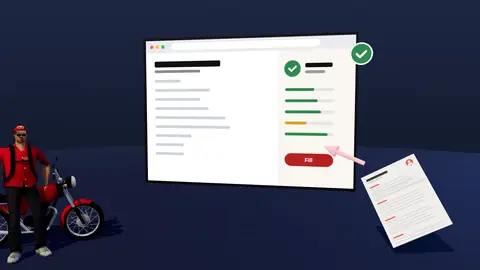
The JobAny extension reads the vacancy and fills fields, but you review and confirm each submit. Combine with tailoring for fit.
Paste a job link, add your resume and get a requirement-by-requirement report.
A sensible weekly plan
| Activity | Per week |
|---|---|
| Tailored applications | 8 to 12 |
| Referral or direct messages | 5 to 10 |
| Follow-ups | As due |
| Review and adjust | 30 minutes |
Signals that volume is hurting
- Dozens of applications and no replies.
- Applying to roles outside your level.
- Using the same resume for everything.
- Forgetting where you applied.
What mass auto-apply gets wrong
Sending the same resume to hundreds of roles produces a wide, shallow footprint. Employers receive generic applications, answers to screening questions are often wrong or empty, and you lose control of what is submitted in your name. Many recruiters can spot a mass application, and some systems flag repeated submissions. The effort per application is low, but so is the chance of any single one succeeding.
What fully manual applying costs
Doing everything by hand gives you full control, but each application can take thirty to sixty minutes when you tailor properly. At that rate, a person can do only a handful of strong applications per week. Burnout is real, and quality drops as fatigue builds. The solution is not to give up care, but to remove the mechanical work.
The assisted middle path
- Let a tool find and rank relevant roles.
- Tailor your resume for the ones you really want.
- Use the extension to prefill routine form fields.
- Review every answer and confirm submit yourself.
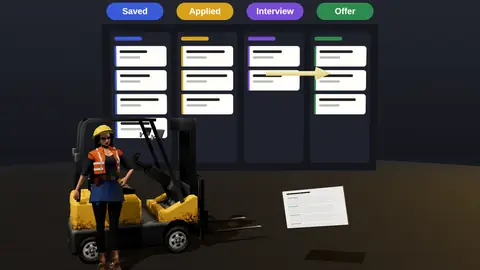
- Log each application and follow up on schedule.
This keeps your judgement on what matters while saving time on what does not. See the extension and the job search agent.
Numbers that matter more than volume
Track reply rate, not applications sent. Ten tailored applications with a 25% reply rate beat a hundred generic ones with 2%. If your replies are low, change the resume, the targeting or the channel, rather than increasing volume. A tracker makes these patterns visible within a few weeks.
Ethics and employer rules
Some sites prohibit automated submissions, and misleading answers can hurt you later. Use tools to save time but never to misrepresent yourself. Honest, specific applications build a reputation with recruiters you may meet again.
A five-question checklist before you decide
- What is my goal this month? A handful of well-matched applications needs different help from a wide search.
- How much time can I give each application? If it is under fifteen minutes, favour tools that speed up routine work.
- What is a wrong decision likely to cost? Paying blind or sending unreadable files costs more than a short trial.
- Who owns my data afterwards? Prefer tools where you can export and delete.
- Can I verify the result myself? Anything that cannot be explained should not drive your choices.
Write down your answers before comparing options, then score each against them. The best choice is rarely the one with the longest feature list; it is the one that fits the next four weeks of your search. Revisit the decision when your situation changes, for example after your first interviews or when you start targeting a new role family.
Key terms explained
- ATS
- Applicant tracking system, software employers use to collect, store and search applications.
- Parsing
- The step where software reads your file and sorts the text into fields such as name, employers and dates.
- Tailoring
- Adjusting emphasis and wording of the same true facts for one specific vacancy.
- Requirement coverage
- How many of a vacancy's main requirements your resume proves with evidence.
- Master resume
- Your complete private version with every role and result, from which you build shorter tailored copies.
- Warm introduction
- A recommendation or message passed through someone who already knows both sides.
- Reply rate
- Replies divided by applications sent, the clearest signal of whether your approach works.
Knowing these terms makes it easier to read job ads, compare tools and judge advice you find online, because many claims depend on what exactly is being measured.
What improves results most
A human route beats volume. See how to get a referral and why you are not getting interviews.
Check your resume against a real vacancy
Add your resume and a job link. JobAny shows which requirements are covered, what is missing, what a recruiter sees first and whether the file reads cleanly. Start costs $1, no subscription.
Frequently asked questions
Does auto-apply work?
It can create activity but often produces low-quality matches and few replies.
Is it allowed?
Some sites restrict automation. Follow their terms.
Does JobAny auto-apply?
No. It assists and you confirm.
How many applications per day is reasonable?
A handful of well-targeted ones beats dozens of generic ones.
Should I mix approaches?
Use assistance for forms and your judgement for targeting.
Does volume ever help?
In very broad entry-level markets some volume is normal, but targeting still wins.
Do employers detect bulk applications?
Generic answers and mismatched roles make it obvious.
How do I save time without bulk apply?
Use tailoring support and form filling you confirm.
Is auto-apply against any rules?
Some employers prohibit bots; read each site's terms.
Does JobAny submit for me?
No; you review and confirm each submission.
How many applications per week is good?
Whatever you can do with proper tailoring, often 5 to 15.
Keep reading