Resume vs CV: the difference and which to use
The words are used differently around the world, which causes real confusion. In short: in the US a resume is a short, tailored summary and a CV is a long academic record. In the UK and much of Europe, CV is the normal word for what Americans call a resume. This guide shows how to decide.
- US and Canada: resume for jobs, CV for academia and research.
- UK, Ireland, most of Europe: CV usually means a one to two page job document.
- Follow the employer's wording and the country's conventions.
- When in doubt, send a tailored one to two page document in plain format.
The short answer
| Region / field | Document | Typical length |
|---|---|---|
| US, Canada (business jobs) | Resume | 1 page, 2 for senior |
| US, Canada (academia, research, medicine) | CV | Several pages, complete record |
| UK, Ireland | CV (also used for jobs) | 2 pages |
| Most of Europe incl. Italy, Germany, France | CV / Lebenslauf / curriculum | 1 to 2 pages |
| Australia, New Zealand | Resume or CV, used interchangeably | 2 to 3 pages |
| International organisations, EU institutions | Europass-style CV | 2 pages |
Key differences
| Resume | Academic CV | |
|---|---|---|
| Purpose | Win an interview for a specific role | Record the full academic career |
| Length | 1 to 2 pages | As long as needed |
| Tailoring | Rewritten for each vacancy | Updated, not rewritten |
| Content | Relevant experience, results, skills | Publications, grants, teaching, conferences |
For ordinary job applications, even when the vacancy says "CV", you almost always want the tailored, concise format.
Europe: photo, personal data and Europass
Conventions vary. In Germany, Italy and some other countries a photo and personal details (date of birth) have traditionally appeared, but they are not required and in some markets discouraged because of anti-discrimination rules. In the UK and US they are omitted. Check recent norms for the target country and, if in doubt, leave out the photo and sensitive personal data. Europass is an EU template; it is accepted by some employers but not necessary, and a clean custom layout is usually better for parsing.
Paste a job link, add your resume and get a requirement-by-requirement report.
Where each term is used
The US and Canada separate the two: a resume is a short, targeted document for jobs, while a CV is a comprehensive academic record used for research, teaching and some medical roles. In the UK, Ireland, South Africa, India and much of Europe, CV is the everyday word for the job document, and it is usually one to two pages. Australia and New Zealand use both words interchangeably. Check the vacancy's language and the employer's country, not just the word.
What an academic CV adds
- Publications, with full citations.
- Grants, fellowships and awards.
- Teaching experience and supervised students.
- Conference talks and posters.
- Professional memberships and service.
These sections are not needed in a standard job application; including them can make a business resume long and unfocused.
Europe: privacy and customs
Customs differ: some countries include a photo, date of birth or nationality, others avoid them because of equal-treatment rules. Employers in many countries increasingly prefer a CV without a photo. Do not include sensitive personal data unless it is clearly customary and useful. Where a privacy-consent line is customary, as in Italy, add it at the end. Read CV for jobs in Italy for an example.
One master, many versions
Keep a master document with everything, then derive versions: a one-page resume for US-style applications, a two-page CV for European ones and a full academic CV for research roles. Tailor each to the vacancy (how) and export a clean file (export).
Next steps after reading this guide
Apply what you just read to one real resume rather than keeping it as theory. Open your current file, pick the single change from this guide that would help most, and make it today. Then check the result against a real vacancy with resume analysis and keep the improved version as your new master. If you are still deciding what to prioritise, read common resume mistakes and how to quantify achievements, which fix most weak resumes. When you are ready to send, run the readability test from ATS-friendly format, and log the application in your tracker so you remember to follow up. Small, consistent improvements beat one large rewrite: change one thing, send, observe the replies, then change the next.
How to choose in practice
- Read the vacancy wording: if it says CV, still send a concise tailored document unless it is an academic role.
- Look at the country and the sector's conventions (see the table).
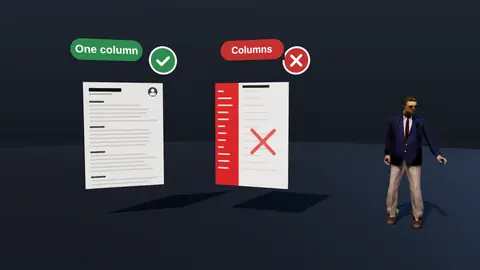
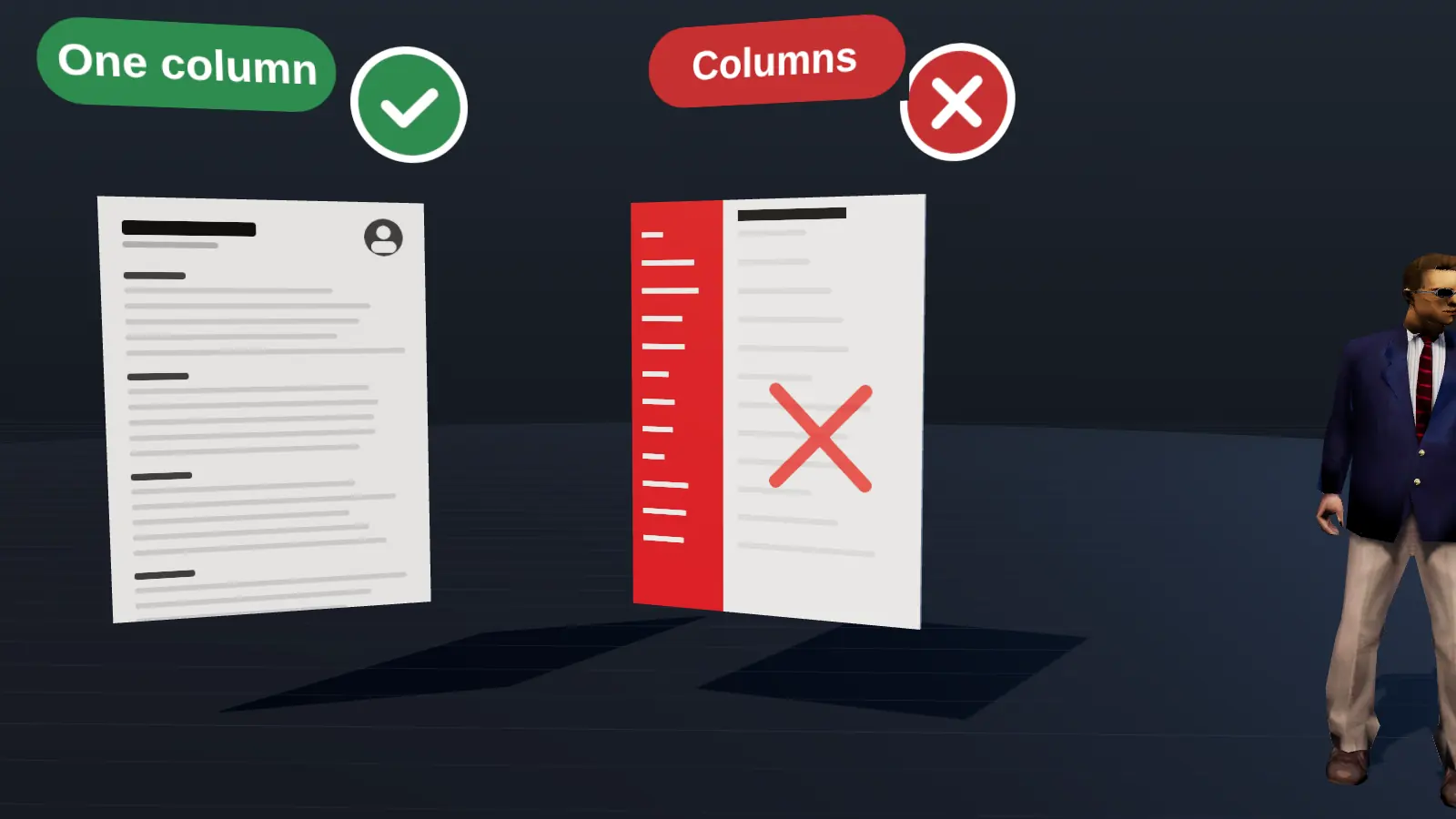
- Keep to one or two pages in a plain, single-column ATS-friendly format.
- For academic or research roles, prepare a full CV in addition and send the one requested.
See also resume for jobs in Italy and resume for Ukrainians in Europe.
Check your resume against a real vacancy
Add your resume and a job link. JobAny shows which requirements are covered, what is missing, what a recruiter sees first and whether the file reads cleanly. Start costs $1, no subscription.
Frequently asked questions
Is a CV longer than a resume?
In the US, yes for academic CVs. In the UK and Europe the CV is usually two pages, the same as a resume.
Can I use one document for both?
Keep a master with everything and derive a tailored one to two page version for each job.
Do I need a photo?
Not in the US or UK. In some European markets it is common but optional. Follow local norms.
Should I use Europass?
Optional. Many employers accept any clear CV.
Which does an ATS prefer?
Neither; it reads clean text. Use a single-column layout.
What is a Europass CV?
A standard EU template; optional, and a clean custom CV is also accepted by most employers.
Is a one-page CV acceptable in Europe?
Yes, especially for early-career candidates.
Which should I send to a university job?
A full academic CV unless asked otherwise.
Can I change my CV language per country?
Yes; match the language of the posting.
Keep reading