How many pages should a resume be?
The honest answer is: as long as it takes to show what this job needs, and no longer. In practice that means one page for most people early in their careers and up to two pages for experienced ones. Here is how to decide, what to cut and how to avoid tiny fonts.
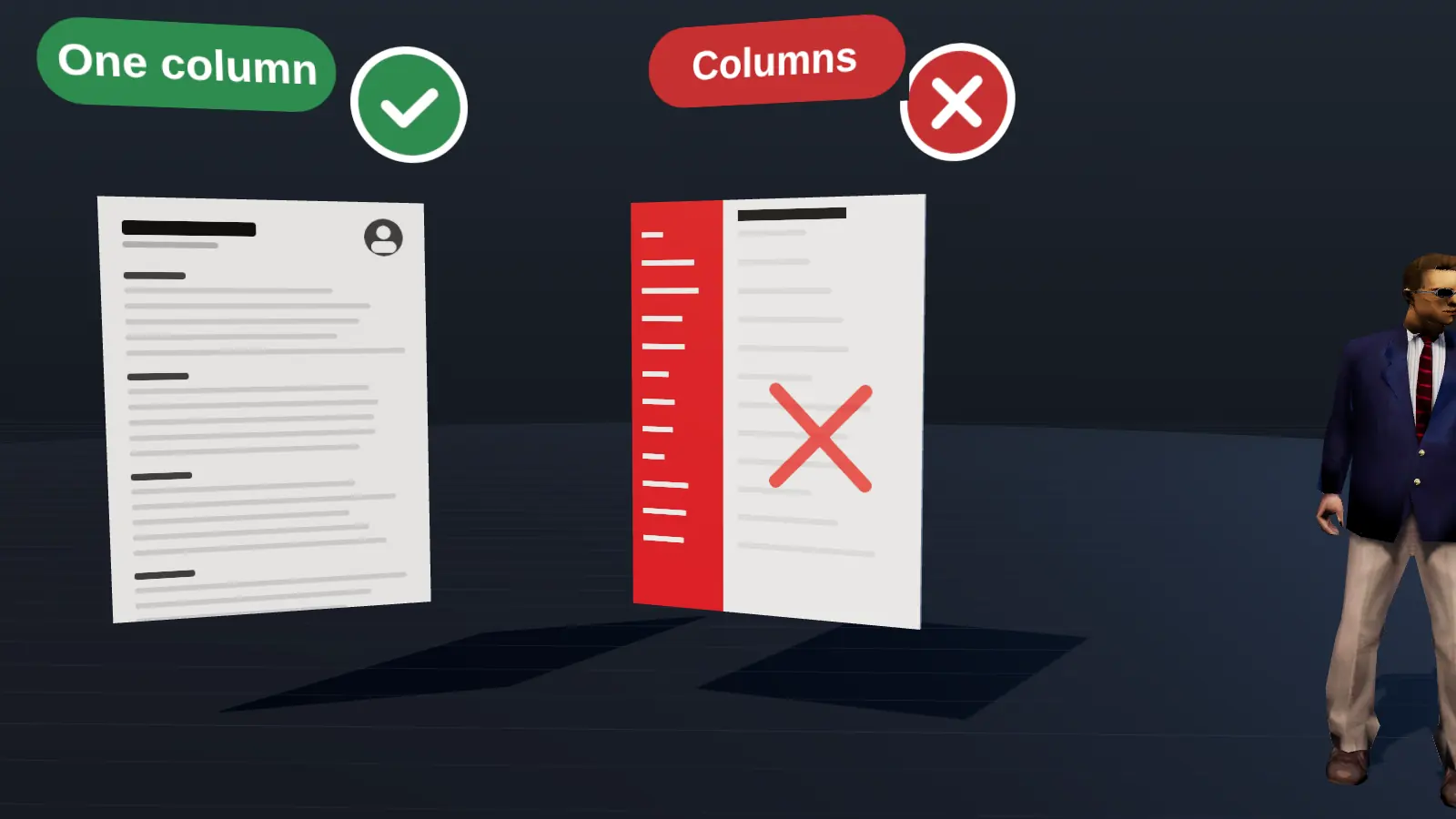
- One page for students, graduates and under about ten years of experience.
- Two pages are fine for senior roles with substantial relevant history.
- Cut by relevance, not by shrinking fonts or margins.
- Put the strongest material in the first half of page one.
Rules of thumb
| Situation | Length | Why |
|---|---|---|
| Student or recent graduate | 1 page | Limited relevant history; focus on projects and skills |
| 2 to 10 years of experience | 1 page, sometimes 2 | One page forces relevance; use two only if all of it matters |
| 10+ years, senior or management | 2 pages | Scope, team size and progression need space |
| Academic, medical, research (CV) | Longer, by norm | Publications and credentials are expected (see resume vs CV) |
| Government or federal applications in some countries | Per the posting | Follow format instructions exactly |
Recruiters read the top of page one most carefully. A strong, tight single page beats a loose two-page document in many cases.
What to cut first
- Jobs older than 10 to 15 years that do not support the target role (one line or remove).
- Bullets that describe duties without results or that repeat each other.
- Generic skills, outdated software and hobbies with no relevance.
- Long summaries: reduce to three lines.
- Duplicate details between summary and bullets.
For every bullet ask: would a hiring manager for this specific job care? If not, cut it or shorten it.
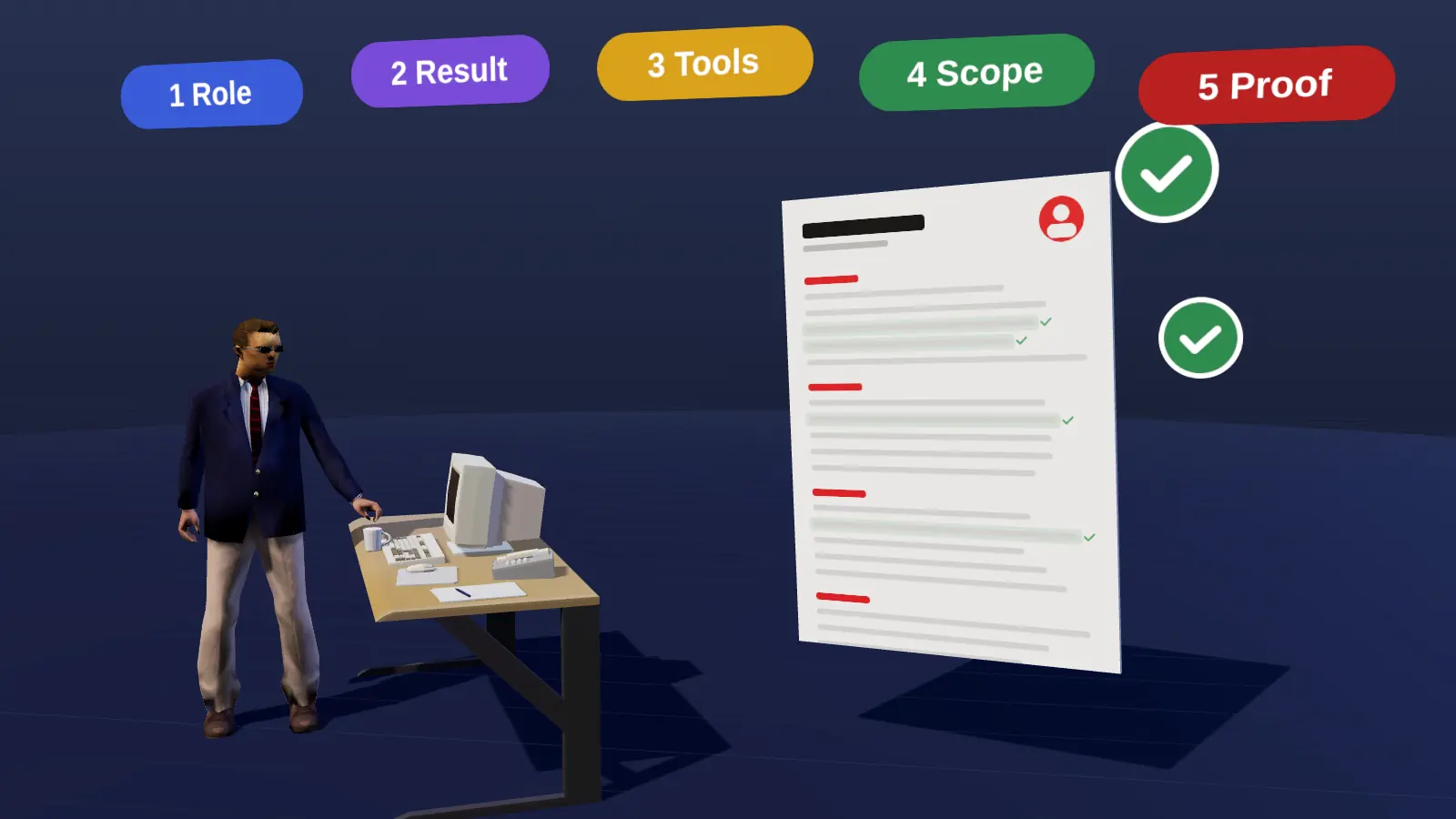
Do not shrink fonts or margins
Dropping to 9-point type or half-inch margins makes the page dense and hard to scan, and recruiters skim it anyway. Stay at 10 to 12 points with margins of at least 1.5 to 2 cm. If it does not fit, edit content, not formatting.
Paste a job link, add your resume and get a requirement-by-requirement report.
When a second page is justified
A second page works when it is at least a third full and contains real, relevant content: senior roles, multiple recent jobs, projects or publications that support the application. Avoid a second page with two lines on it. Put the strongest information on page one, because some readers never turn the page.
Country differences
US and UK norms favour one or two pages. In parts of continental Europe, a two-page CV is common and a photo and personal details may appear. Academic CVs follow discipline norms. Check local expectations; see resume vs CV and resumes for jobs in Italy.
Guidelines by experience
| Experience | Pages | What to cut |
|---|---|---|
| Student or entry level | 1 | Anything not tied to the target role |
| Up to about 10 years | 1, sometimes 2 | Old roles beyond ten to fifteen years |
| Senior, managerial | 2 | Duties repeated across roles |
| Academic or research | CV, several pages | Nothing if the CV is requested in full |
How to shrink a resume without losing impact
- Cut every bullet that does not support the target role.
- Merge similar bullets and keep the strongest result.
- Shorten roles older than ten years to one line.
- Move education to the bottom and keep it brief.
- Use 10 to 11 pt fonts and 1.5 cm margins, but never below 10 pt.
When two pages is right
Use two pages when you have a decade or more of relevant experience, lead teams, or have several roles with clear results. Fill page two properly: do not leave three lines on it. Keep the strongest evidence on page one, because page two is read less. Repeat your name and a page number in the body of page two, not in a header that parsers ignore.
Other markets
In the UK and most of Europe, two pages is a common maximum for a CV. In the US, one page is expected early in your career. Academic CVs run longer. See resume vs CV for regional norms.
Next steps after reading this guide
Apply what you just read to one real resume rather than keeping it as theory. Open your current file, pick the single change from this guide that would help most, and make it today. Then check the result against a real vacancy with resume analysis and keep the improved version as your new master. If you are still deciding what to prioritise, read common resume mistakes and how to quantify achievements, which fix most weak resumes. When you are ready to send, run the readability test from ATS-friendly format, and log the application in your tracker so you remember to follow up. Small, consistent improvements beat one large rewrite: change one thing, send, observe the replies, then change the next.
Length after tailoring
When you tailor for a vacancy, use the same space for different priorities: expand the matching items, shorten the rest. A tool that shows what a recruiter sees first, like JobAny's analysis, helps you decide what earns its place on page one.
Check your resume against a real vacancy
Add your resume and a job link. JobAny shows which requirements are covered, what is missing, what a recruiter sees first and whether the file reads cleanly. Start costs $1, no subscription.
Frequently asked questions
Is a one-page resume better?
For under about ten years of experience, usually yes, because it forces relevance. It is not a rule for senior candidates.
Can my resume be two pages?
Yes, if the second page is at least a third full of relevant content.
How many pages for a CV?
In academic and medical fields, CVs can be longer. Follow your field's convention.
Does an ATS care about length?
Not directly. Recruiters do. Keep it scannable.
What font size is safe?
10 to 12 points with clear spacing.
Is a three-page resume ever okay?
Rarely, mainly for academic or highly technical CVs that are requested in full.
Does the length matter for ATS?
No, but long documents dilute relevance for people.
Should I reduce font size to fit?
Cut content first; keep fonts readable.
Can I add an appendix?
Link to a portfolio instead.
Keep reading